We had been told that we MUST bring passports for the trip with Klaus to the abandoned town further south and had been warned that we and the transport we used might be searched as we left the area. This was a visit that could only be made with a licensed tour operator for the Sperrgebiet.
Safely signed in on the very edge of Kolmanskoppe we set off over the rough land (in a 4×4 fortunately!) to visit some of the further points of the diamond fields.
But first, there were seals to visit at Atlas Bay. The Cape fur seal colony here has been used in research into the habits of seals. Scientists study these seals to understand how changes in the Benguela ecosystem (like shifts in prey fish) affect them.
I have to confess that, initially, I saw very few animals on the rocks, just those that were ‘sitting up and taking notice’ but then I realised that their colouring was so similar to that of the rocks on which they lay that I simply couldn’t tell the difference!!
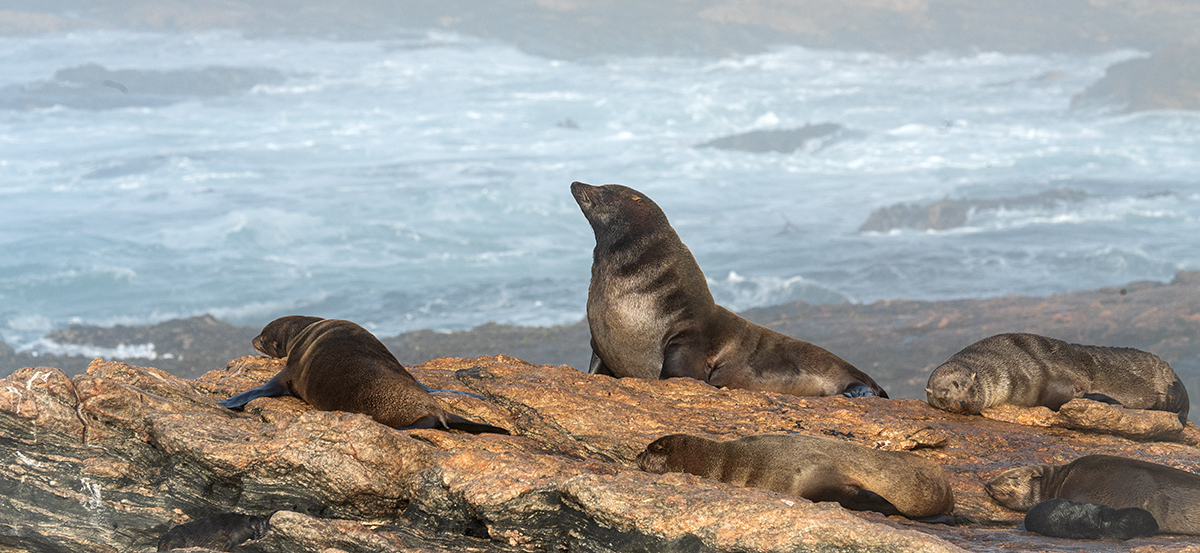
The early morning sea mist didn’t help. Nor did the way the very young pups were being protected in the shade of their mother’s body.
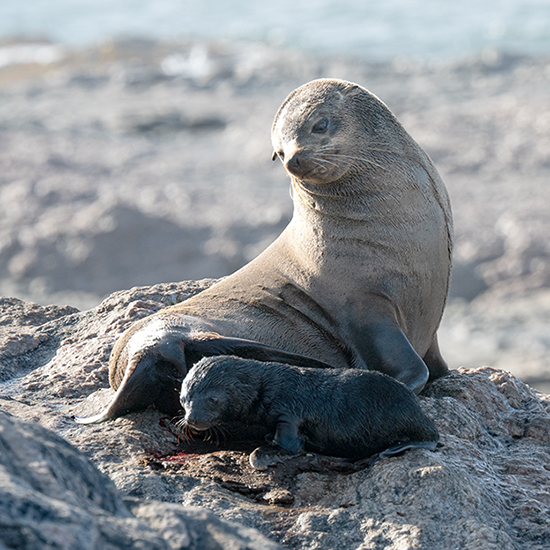
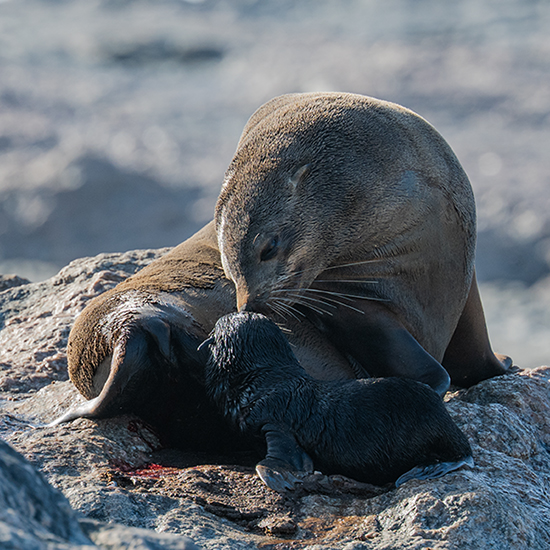
Some of the little ones were quite adventurous and we had been warned to stay back so that we didn’t appear to be a threat: apparently seals can move quite fast when they sense a threat!
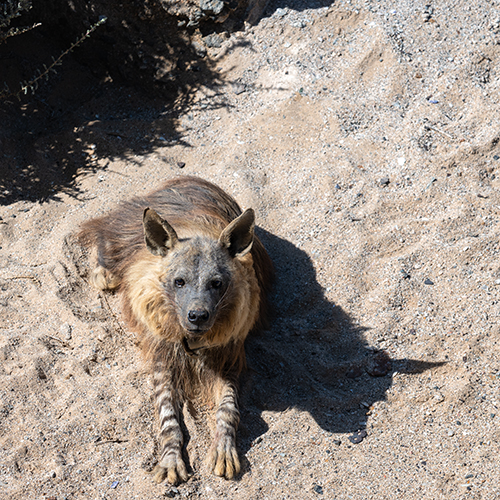
The whole colony kept us amused for a while and I suspect we could have spent a lot longer there: but we were expected further on by a young French woman: a scientist researching the habits of the brown hyena who live around the disused mining plant. Earlier in the trip one of the group had said his aim in coming was to see a brown hyena. He had left us at Sesirem but now there was a possibility we would actually see a brown hyena. She was lying in the sun seemingly without a care in the world and, although we were reminded to be silent and move slowly and, preferably, out of her line of vision, seemed undeterred by a group of foreigners trying to photograph her.
Apparently this was the grandmother of the group.
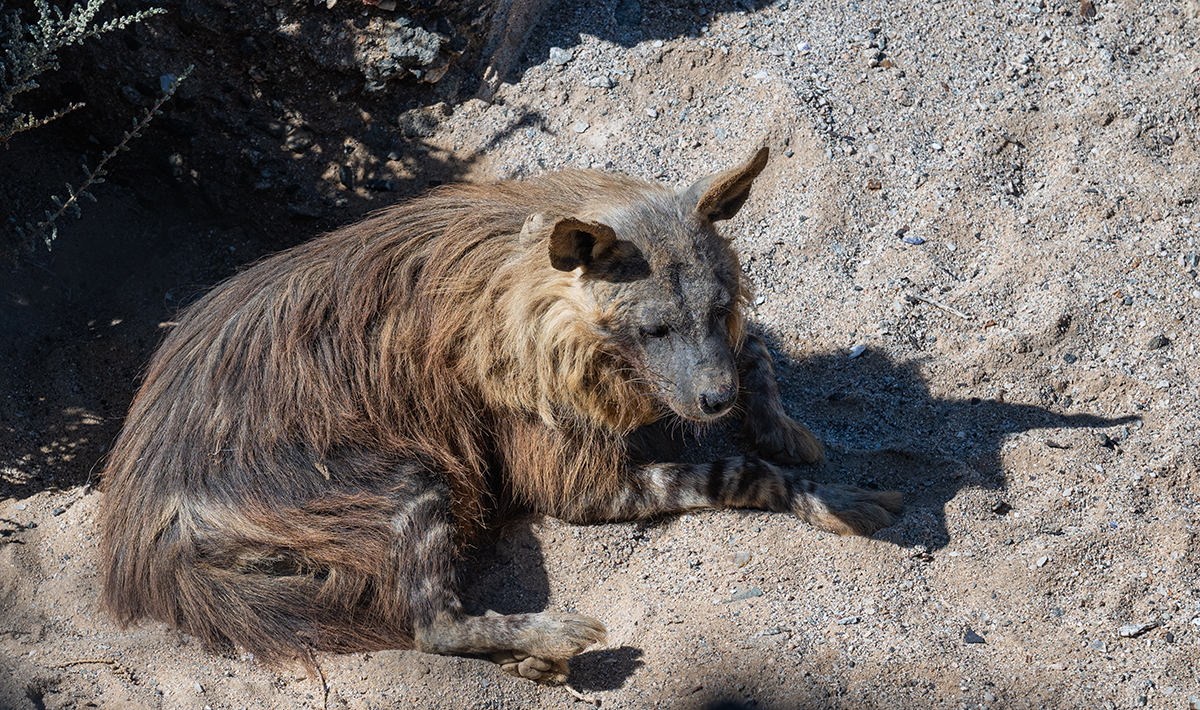
Every time we passed that area we looked to see if she had moved or been joined by others but these images showing the long hair and the stripey legs were the best we managed. An hour later she was still in almost the same position, clearly enjoying the sun and seclusion.
On one occasion she did raise her head and look straight at me before lying down again. It’s perfectly possible she couldn’t actually see us but there was always the possibility she might attack.
All this before we had even started to visit the mining town of Elizabeth Bay which was first settled in the 1920s but had a very short existence.
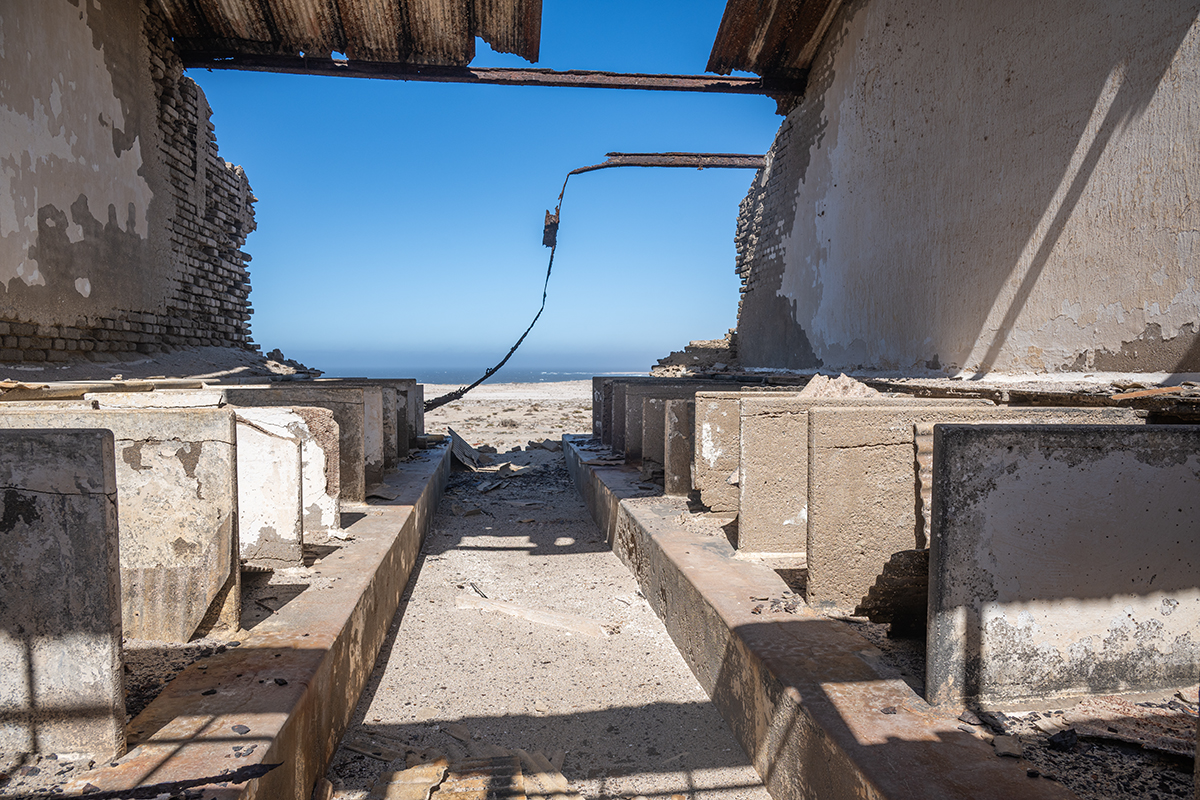
This settlement was different from Kolmanskoppe: it was right on the coast and was very much a segregated community with the white population having much more lavish accommodation than the black workers.
The shell of the accommodation block shows just how bleak life was for the workers who were away from home for months at a time with no contact. The concrete barriers mark the space allowed for each man.
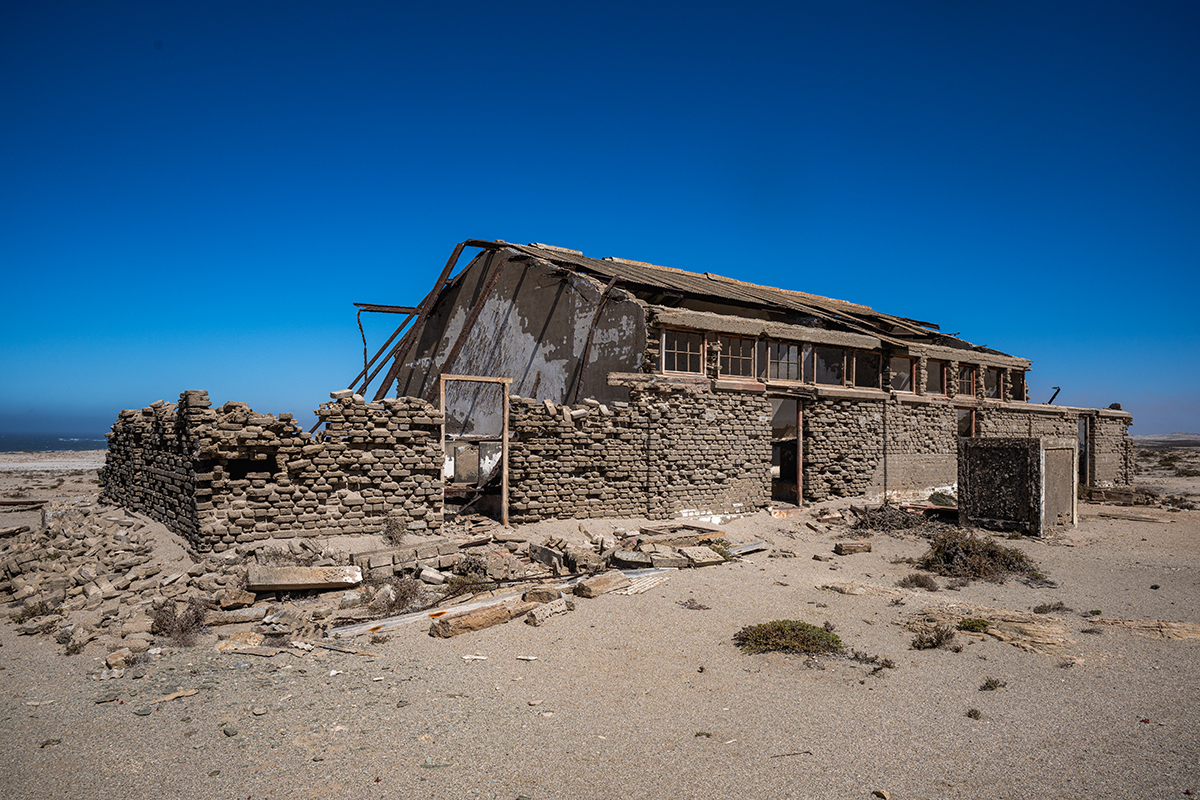
The walls looked strong and the square ‘building’ in the centre is a communal toilet. The view, of course, was directly out to sea.
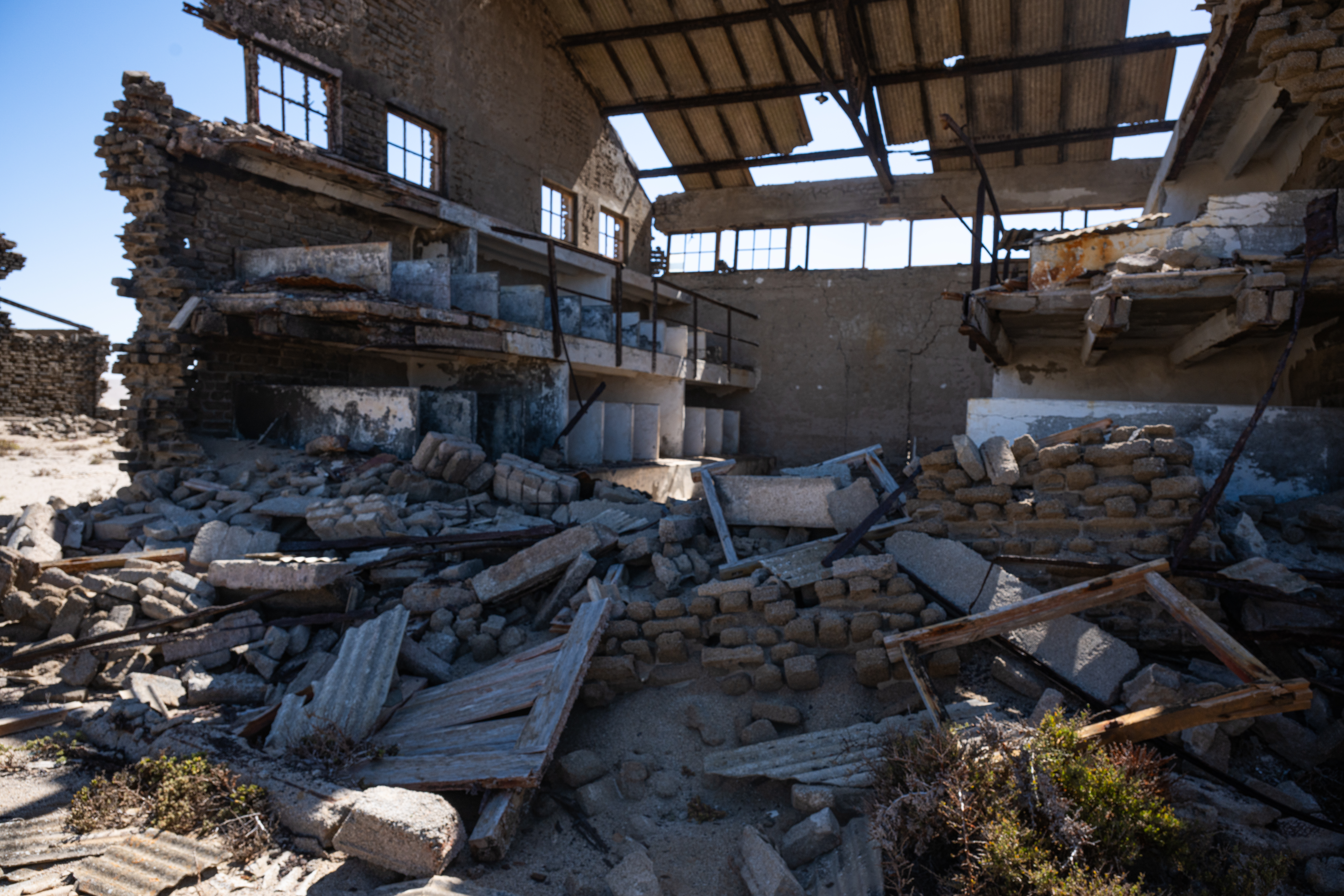
It was only when I looked at the photographs that I realised some of the buildings might truly be described as bunkhouses with two layers of accommodation.
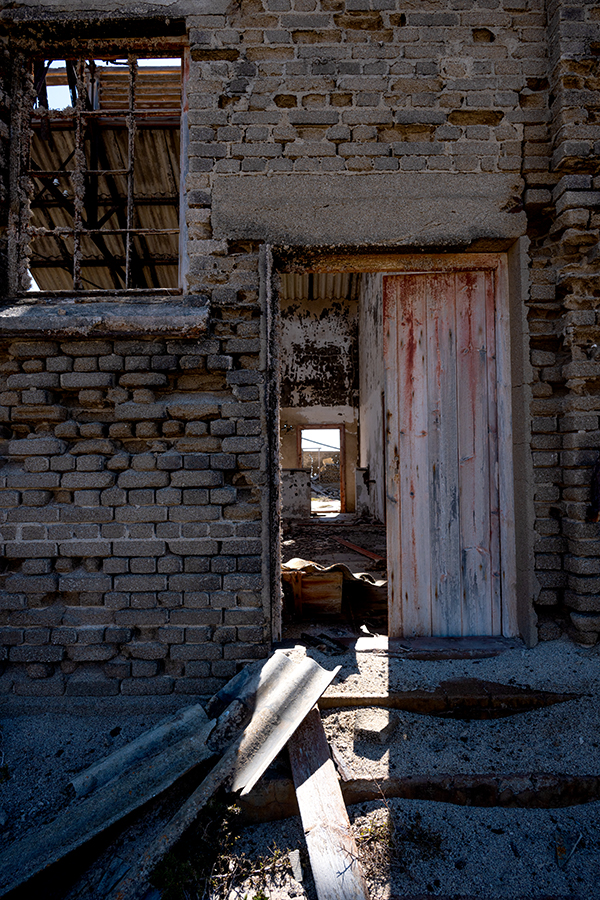
Many of the buildings were in the same state as those in Kolmanskoppe: allowed to fall into ruin and to crumble. There were bits of ceiling lying around on the ground where they fell – no doubt with the danger of asbestos integral to their materials.
Elizabeth Bay seemed much more widely spaced and much more open to the strong salt-bearing winds than Kolmanskoppe. In some ways, it seemed much more developed and more typically industrial. It seemed less real, in a way, too, maybe because it was less ‘compact’. It wasn’t as easy to imagine real people living their daily lives there.

We had been promised a cup of coffee in the manager’s home. What was put before us in one of the outhouses was a veritable lunchtime feast! While it was prepared we were able to explore the house a little and enjoy the views out over the bay.

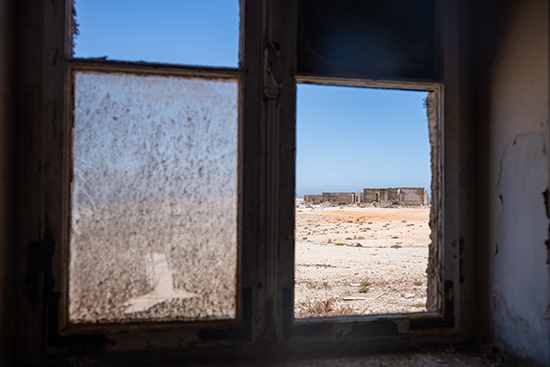
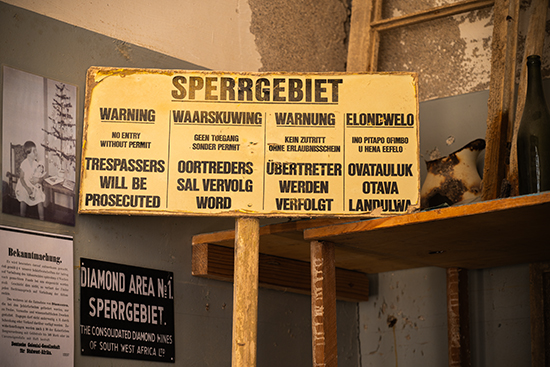
And so the last full day of our new experiences came to an end after a final cursory inspection of the vehicle at Kolmanskoppe to make sure we had no illegal bounty. Still nobody checked our passports…
Two days driving would take us back to Windhoek and flights home. Even that final journey was not without incident: nowhere to find coffee after Aus on the first leg as it was Sunday afternoon and our favourite cafe in Betta was closed and then, after a lovely stay at Duwisib Guest Farm, our trusty vehicle giving up on us two hours from our final destination and needing a new alternator. A mechanic brought different transport out from Windhoek and we drove in luxury to our final overnight stop.
Good conversations and lots of patience in that time indicated what a pleasant group this had been to travel with: lots of humour, even sometimes aimed at one another and curiosity, too.
Were there regrets? Aren’t there always?
We’d have liked more close sightings of the big five, but we had unusual sightings and saw lots of interaction between animals. I would love to be able to tell you all about our walk with rhinos but can’t because of the fear that, if the wrong people know where they are, they will be hunted for their horns.
But these things reminded us that we were not in a zoo, watching animals in captivity. This was THEIR place, we were the visitors.
 Living the Journey
Lovely thanks for sharing your wonderful experiences
Fascinating, Kath, from start to finish. What a journey, what an experience!
You have certainly enjoyed some unique experiences and captured some lovely images during your journey!
Beautiful!