This was the day my real Gaudi experience began and I was introduced to some of the concepts which underlie his work. I will never again think of Antoni Gaudi as just some weird Spanish artist!
We decided taxi would be the easiest means of transport and I was surprised it cost less than I had expected it to. Although we had seen both the facades on the bus stops, I had no idea what to expect from the inside of this huge edifice. I was amazed!
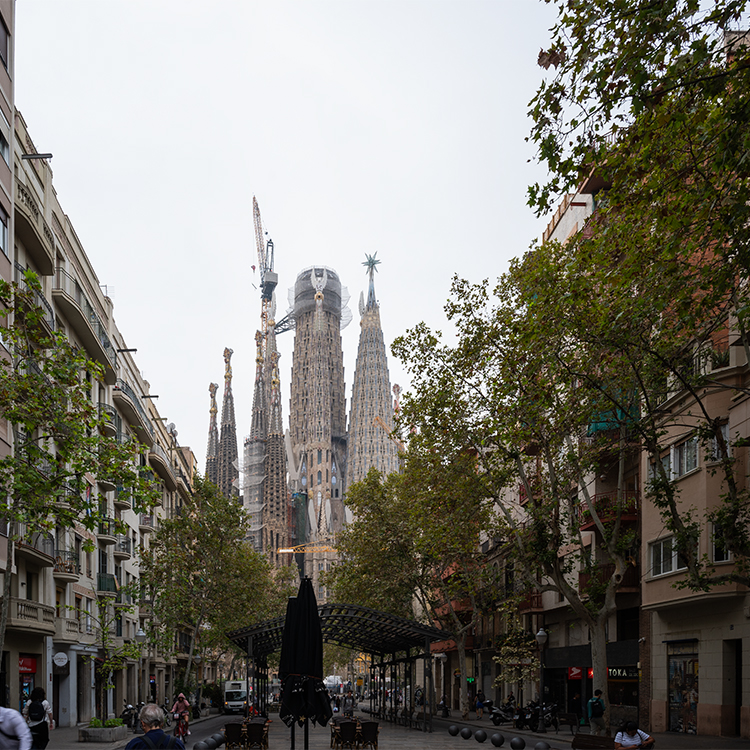
I have learnt on this trip that you should NEVER assume that getting into any place of interest will be easy. I had not thought it would be difficult to join a guided tour of Sagrada Familia so had taken quite a caual approach to finding out if my friends wanted to come, too – I knew they had been to Barcelona a few years ago and may not have felt the need I did to have the structure explained to me. Eventually, I managed to acquire the two tickets we needed to join a tour at 9.30: very early in the Spanish day as few of the shops are open before 10.00a.m and some are even later – but then few shut before 21.00. The staff do work really long hours.
We were to meet the guide opposite number 8, Avenida Gaudi, under the shade. We even had time for a coffee while we waited which was appreciated as I hadn’t had one before leaving the hotel.
Gradually everyone arrived and the guide called us to order and began to explain the form of the short tour we would have. He would focus primarily on the two facades but would tell us a little about the internal structure that was considered important. In fact, unlike many other European cathedrals, here all the story-telling is outside the main worship areas.
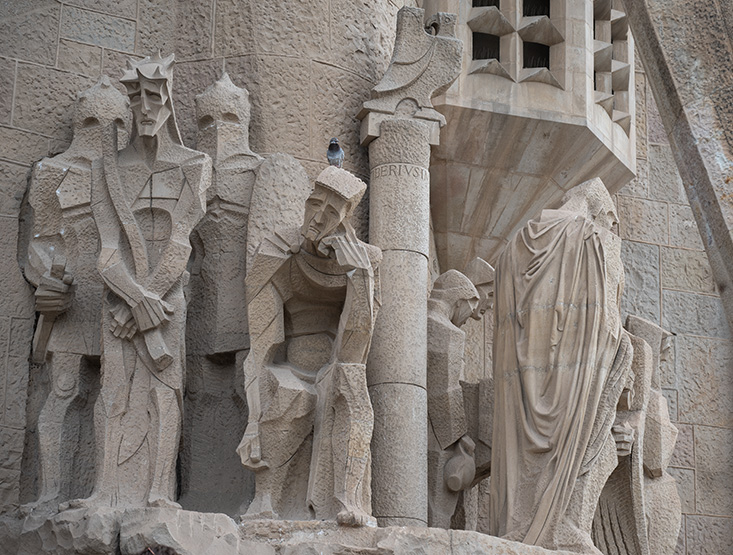
Ours was quite a small group and the guide managed us well. I got the impression he was a Gaudi fan: he certainly seemed knowledgeable, even about tiny details. He walked us around both the major facades- Nativity and Passion – and took time to explain each of the many sculptures, noting such facts as Pilate is represented as a bored man, taking no interest in what’s happening around him as Jesus is led away to be crucified. Each facade is completely different from the other, showing a marked lack of symmetry across the building.
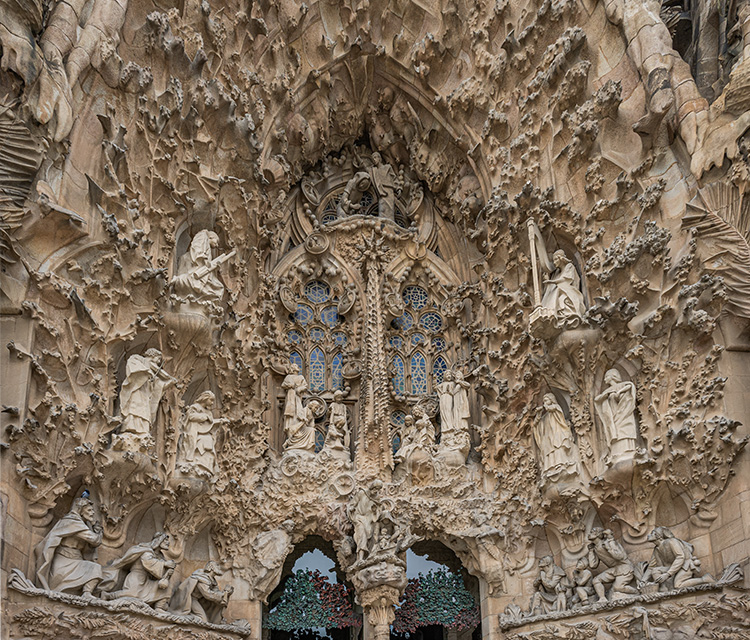
The guide encouraged us to look closely at the sculptures – the one above is above the main entrance and represents the Nativity. He suggested that the faces of the children above the Holy Family can be seen to have facial features of various ethnic groups, making it clear that Christianity is a faith for all nations. The detail is incredible!
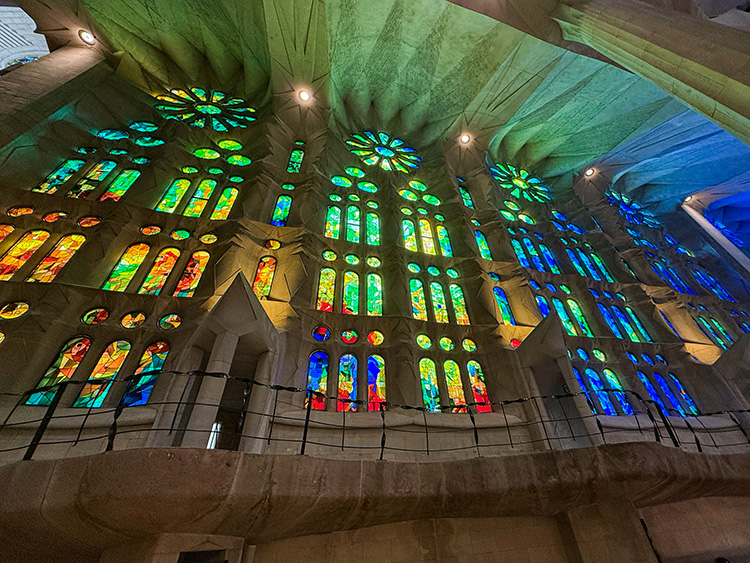
That was impressive enough but stepping inside and seeing what use Gaudi made of natural light is in another league. It’s not much of an exaggeration to say that a couple of instances of the play of light through the glorious stained glass windows on to the marble floor, the stone pillars or the ceiling vaults of the interior took my breath away.
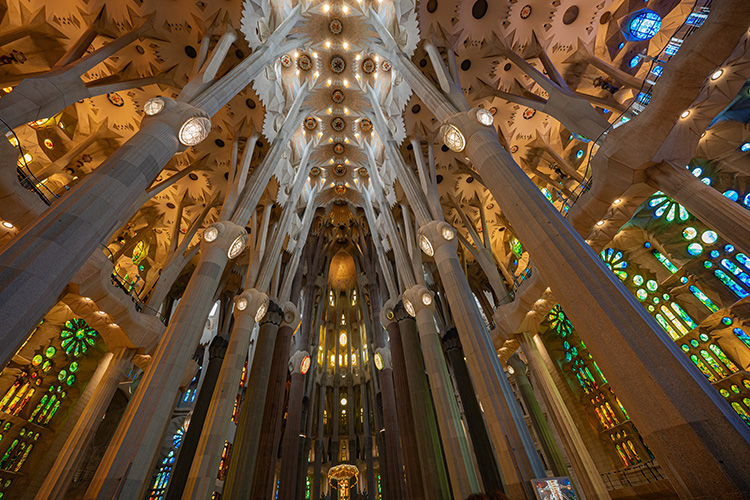
You may notice at the bottom centre of the image above the apparently tiny crucifix. I was fascinated at how dominant this seemed despite its size. Very clever!
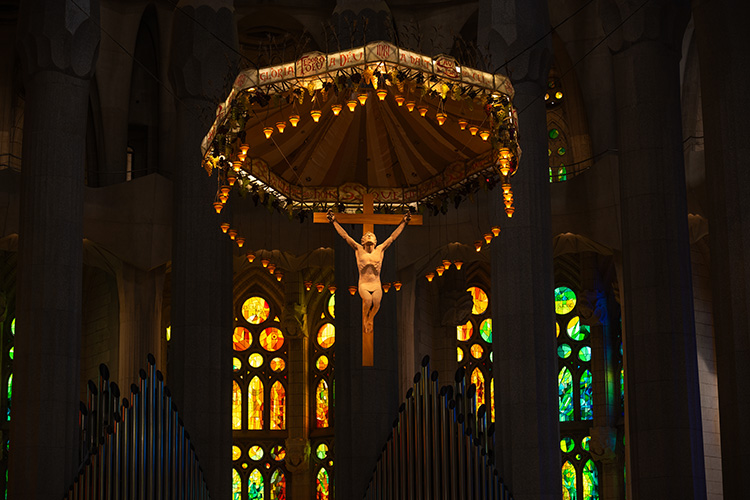
In this more detailed image you can see the Jesus on the cross is looking up. Unusually, it seems he is still alive and may be intended to represent the moment when he called out “My God, my God, why have you forsaken me?”. Looking closely it seems that the flesh on his arms is torn – reflecting the beatings he had suffered, perhaps.
The Passion Facade has a quite different feel from the Nativity. It is much harsher with very sculptured faces and forms. In the example below we see Pilate represented as the one who is bored.
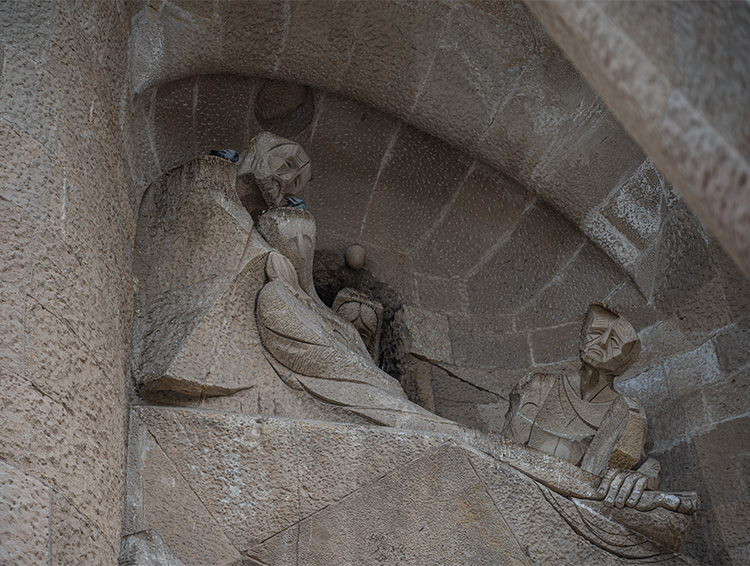
And in the scene below, the man holding Jesus’ leg as he is laid in the tomb is apparently shown with the face of Gaudi himself.
These little snippets made the guided tour worth doing, though I’m sure there would be more to remember if I were to go again: if you go, try to book a midday visit as that is when the light is at it’s best.
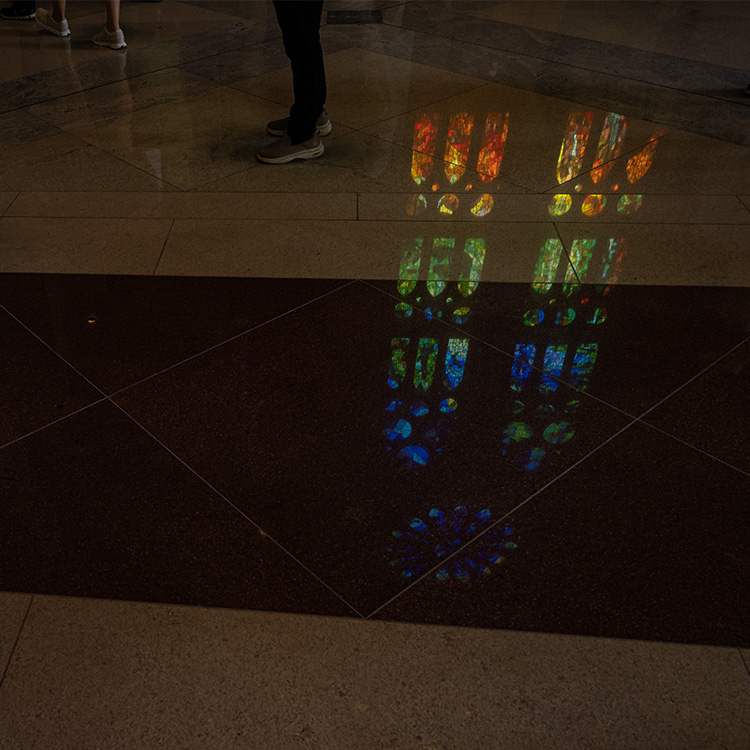
I wandered for a while after the tour officially ended noting the bold reflections on the marble floor and the way the pillars supporting the structure looked more and more like trees. In this building the architect aimed to copy the work of the Greatest Artist. He writes:
“The great book, always open and which we should make an effort to read, is that of Nature”
and of his work on Sagrada Familia it is said:
“On this site Gaudi wished to unite the inspiration he drew from three great books that nourished him as a man, a believer and an architect: the book of nature, the book of Holy Scripture and the book of Liturgy. Thus, he united the reality of the world and the history of salvation, as told in the Bible and updated in the Liturgy.”
I was quite sad to leave this fascinating place, but I’ll not forget it!
Then off to Pl. de Catalunya, to experience an Apple Store as my pencil tip had died. I think the whole transaction took less than 10 minutes.
Lunch on the cathedral square was a real treat. The cafe, which we’d noticed a few times as we passed, had a very clever system where each item was differently tagged with a bamboo cocktail stick- each price band being differently decorated. Then the waitress added them up when you were ready to pay. Very trusting!
We were all ready for a quiet afternoon: Spanish sunshine must induce sleep, I think!!
And the evening provided one last opportunity for Tapas and shopping in the old town for my friends who left the next day. That was pleasant but the highlight was definitely Sagrada Familia.

