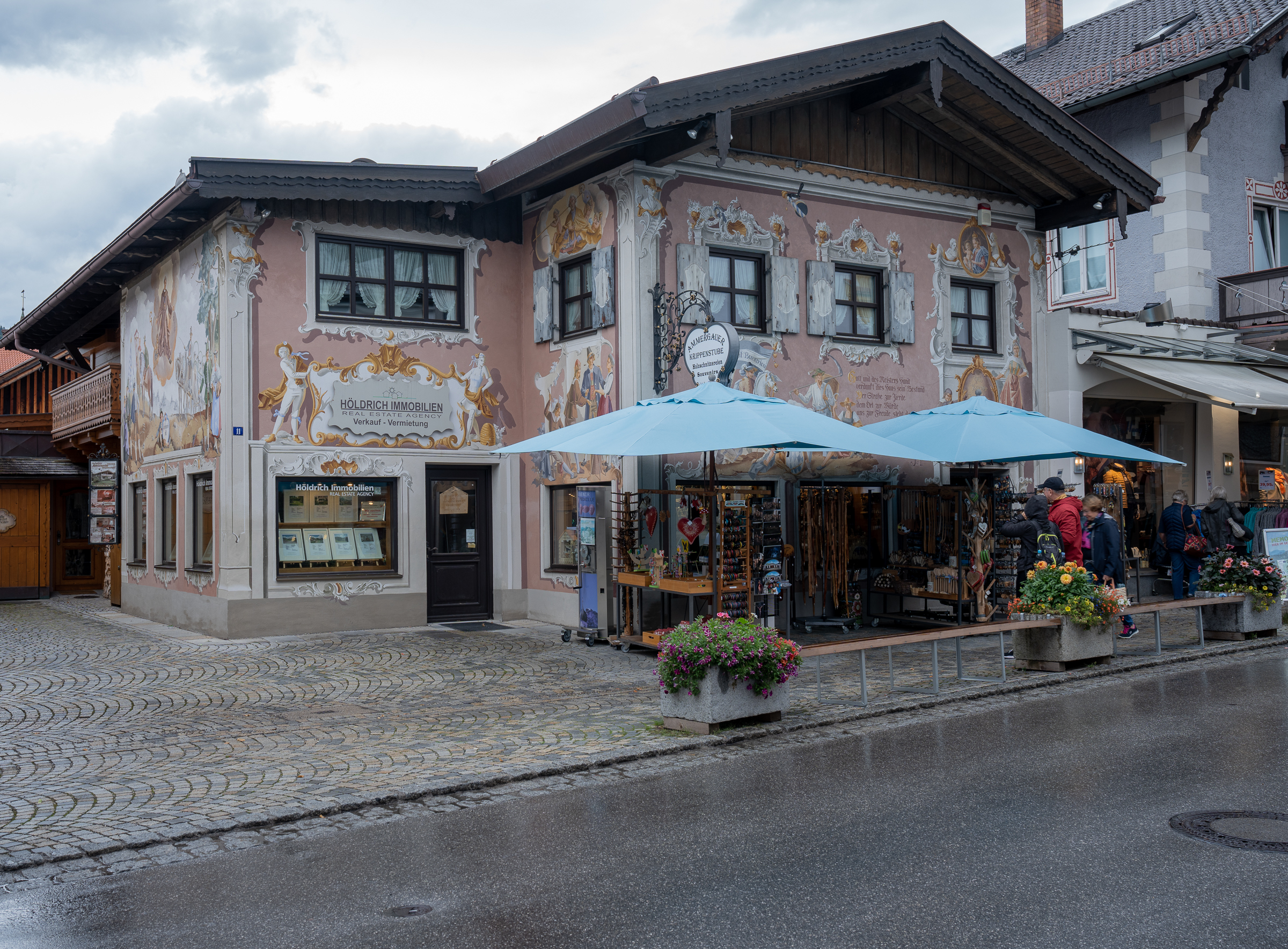
Most people these days will have experienced a typical Bavarian town, largely dependent on tourism for its income whether that be in the Summer or for Winter Sports. Oberammergau is one of those towns. It’s actually in Germany, though many (as I did!) assume it to be in Austria because it is so near Innsbruck.
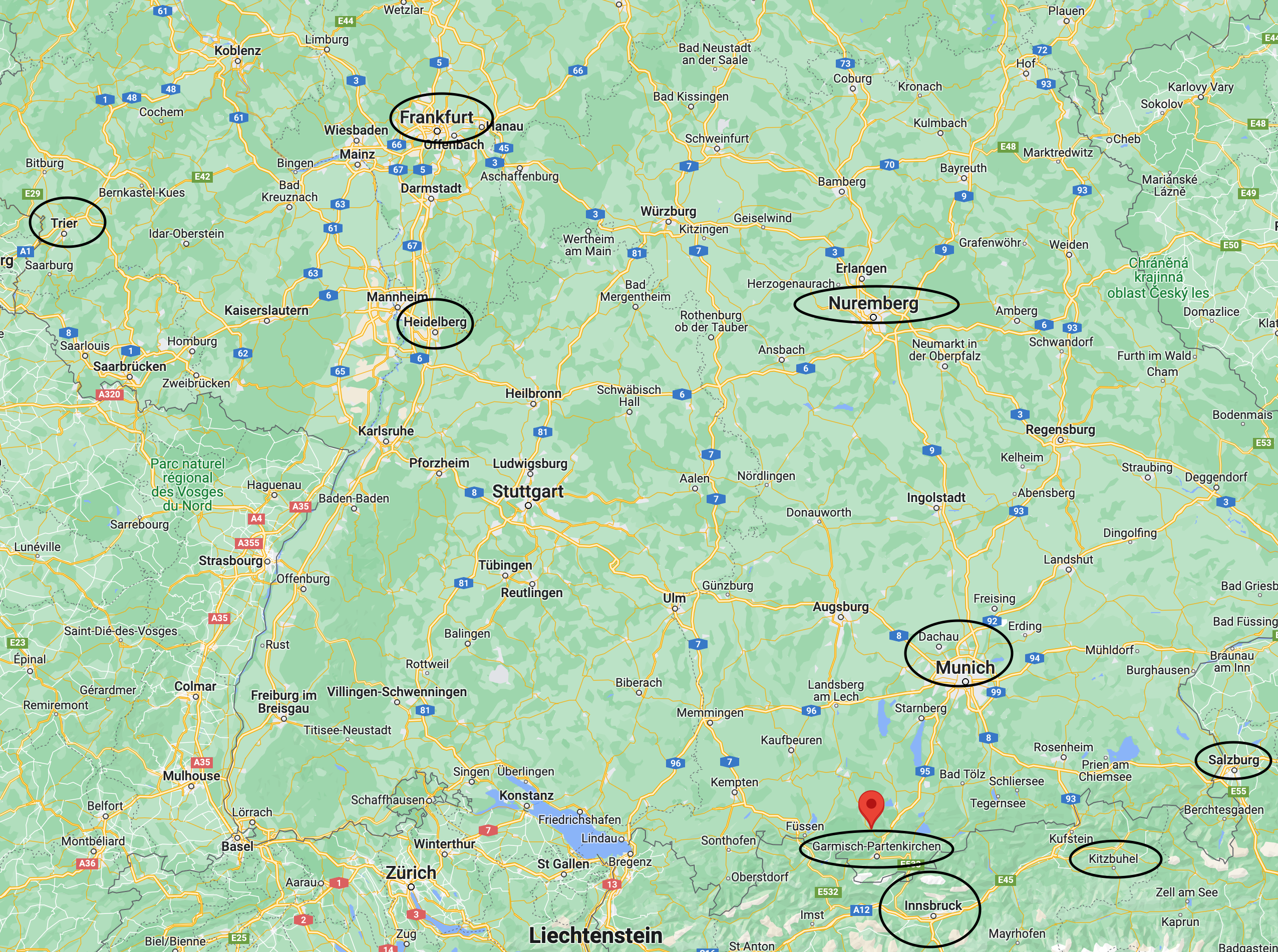
In fact, it’s a town which has easy access to a number of more significant tourist areas and to many places of historical and theological significance. But it was the history of Oberammergau itself and its Passion that was our focus on our final day in Germany. Booked since 2018 and postponed from the original performance dates in 2020, we had almost begun to feel the day would never come when we would experience the once-in-a decade event that involves the population of the town.
There is a Roman Catholic church, typical of many others in the area:

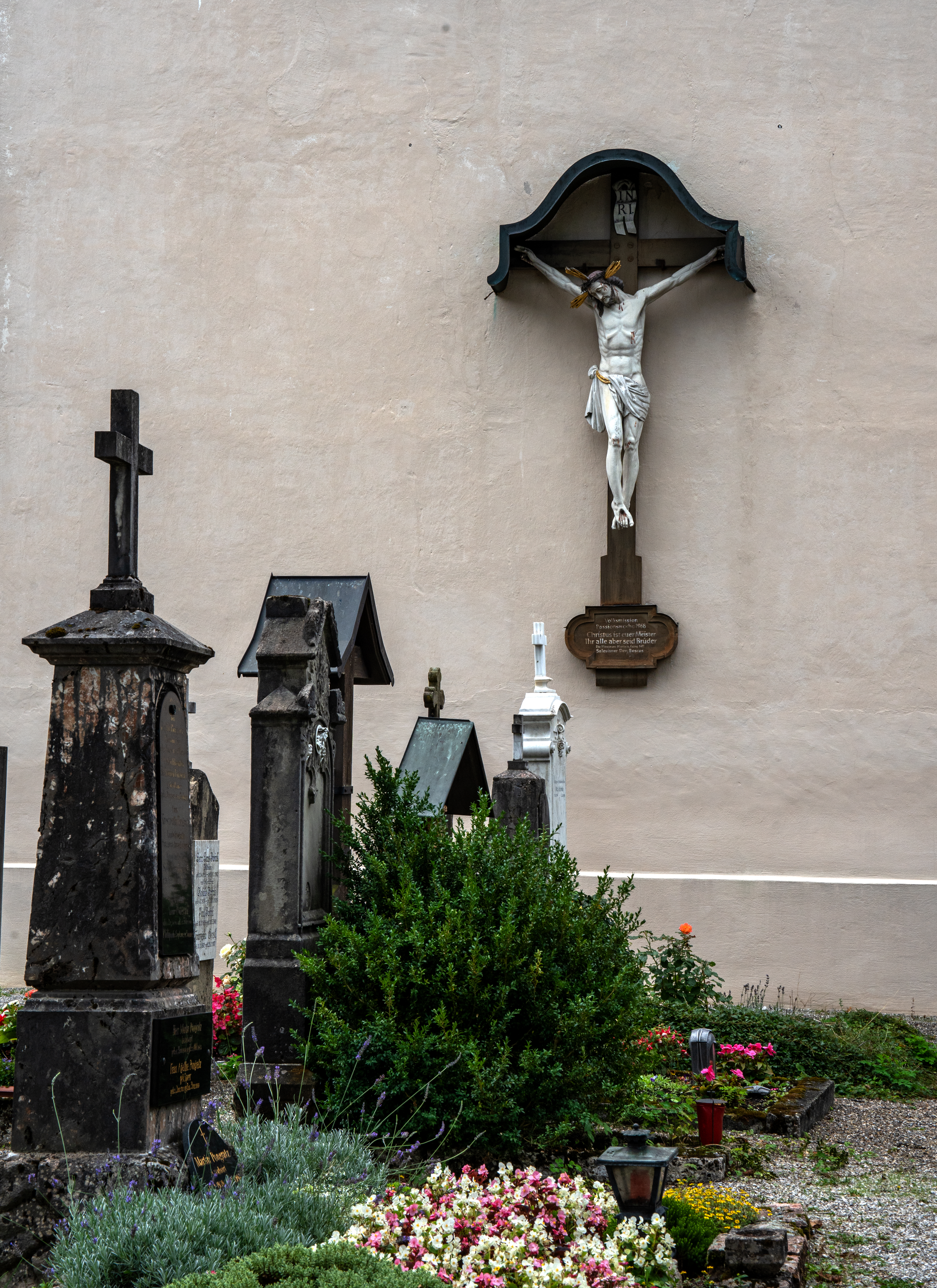
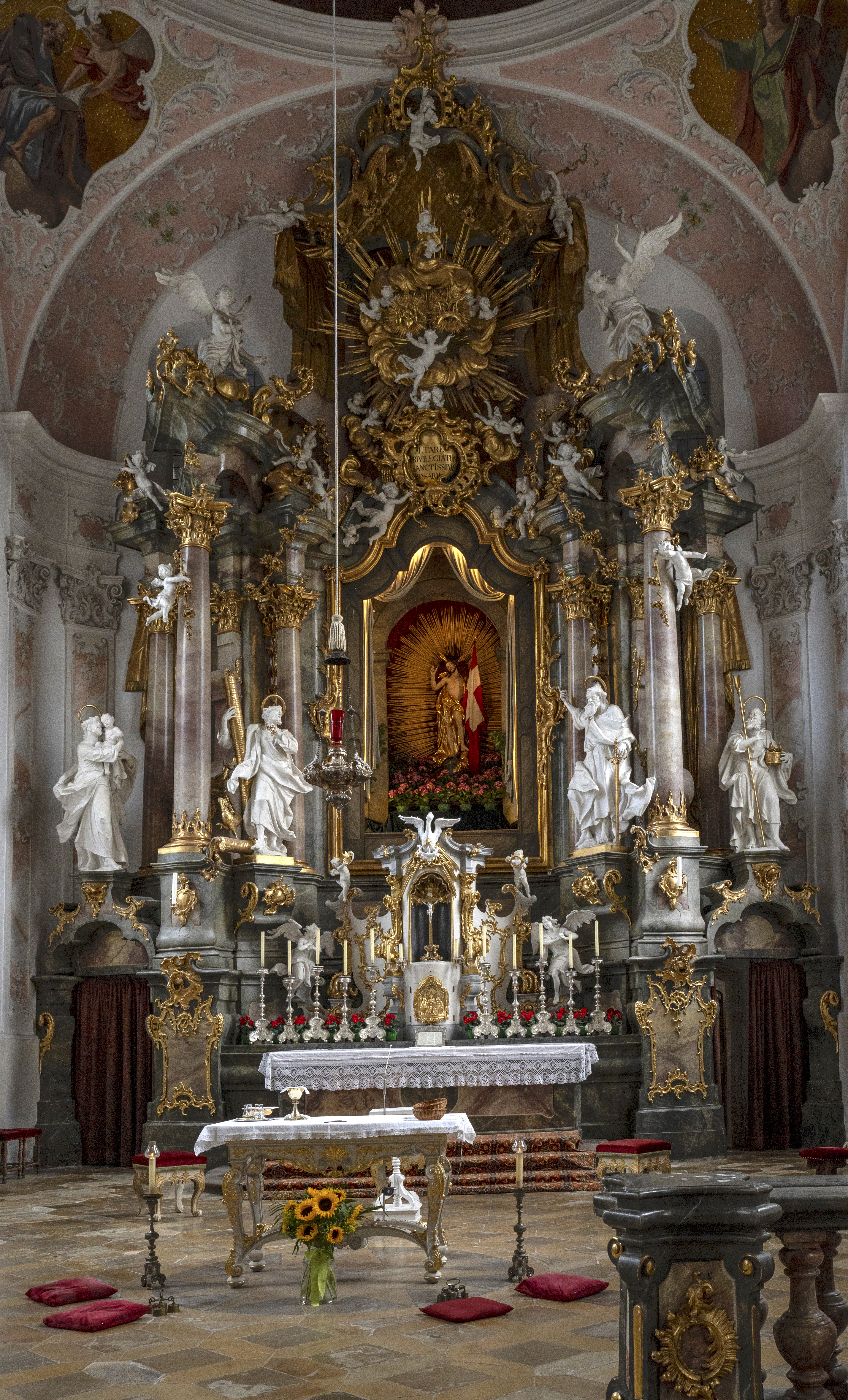
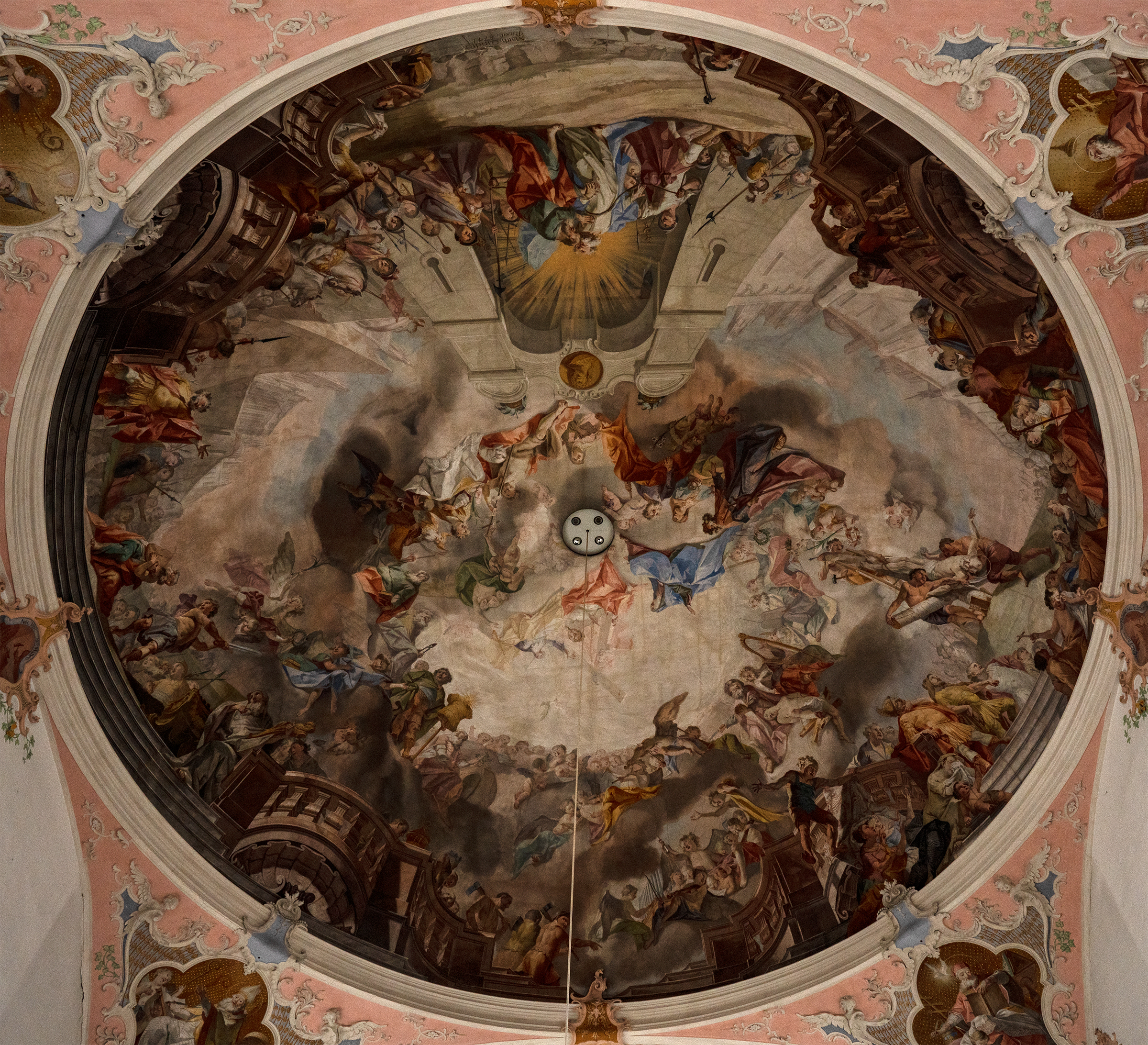
This was the place where the villagers first performed their Passion Play in 1634. It was different then, of course, and wasn’t performed for six months of the year as it is now.
So, why? Why has this little town become so famous for its Passion Play? It all started with a vow.
In 1633, the plague hit Bavaria which was already suffering the Thirty Years War. The people of Oberammergau kept themselves safe by doing exactly what we did a couple of years ago: they stayed at home and had no visitors. There were no deaths among the population. But then, in 1632, it is thought, a local man named as Kaspar Schisler brought the black death to his hometown by visiting for the church fair. It is said that he managed to sneak past the guards for the village celebrations but, the fair being on a Sunday, by the Monday he was dead. Between October 1632 and October 1633 the death registers document 84 deaths. It was on October 27th 1633, according to the records of the priest at the time, that the villagers made ‘a solemn promise to present the passion tragedy every ten years’. From that time onwards, no villager died.
The very first Passion Play was held at Pentecost 1634 in the graveyard next to the parish church – at that time there were many villages with similar events, but it is the Passion Play of Oberammergau that has become the most famous in the world, now attracting an audience of 4500 for each performance. In 2022 performances began on Saturday, May 14th and were then held five days a week until October 2nd – my calculations make that almost half a million visitors!
In 1680 the decision was made that the performances should be in the ‘0’ years, so the 2022 performances are out of sync. and the next performance will be in eight years – 2030. The second time a plague has affected Oberammergau’s Passion.
Having left the bus on the outskirts of the town we walked past all the tourist shops and found a cafe just opening and ready to give us the shot of caffeine we needed before looking for souvenirs and visiting the church. We had spent time looking at the windows of the woodcarvers’ shop opposite the cafe so went to investigate.
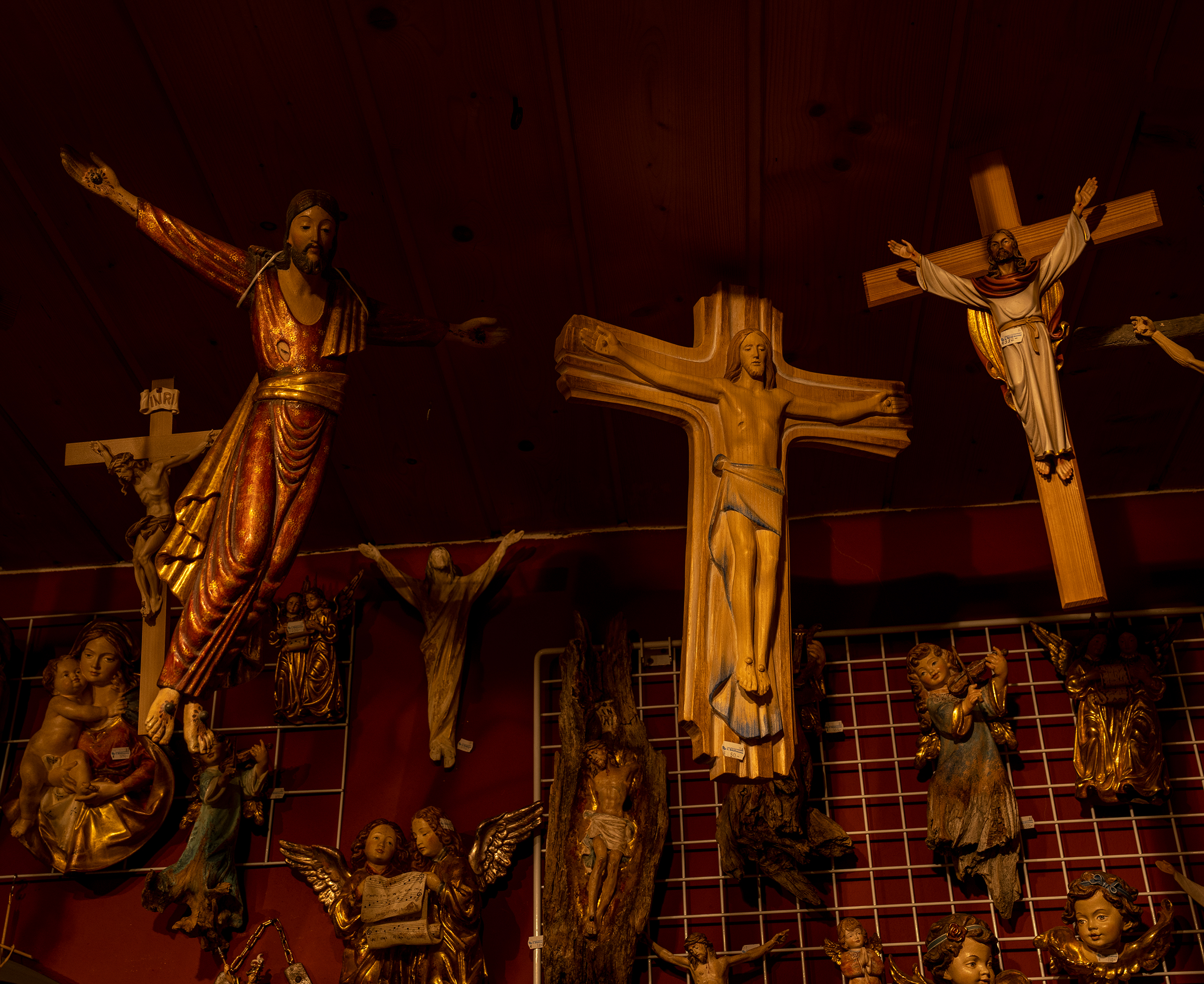
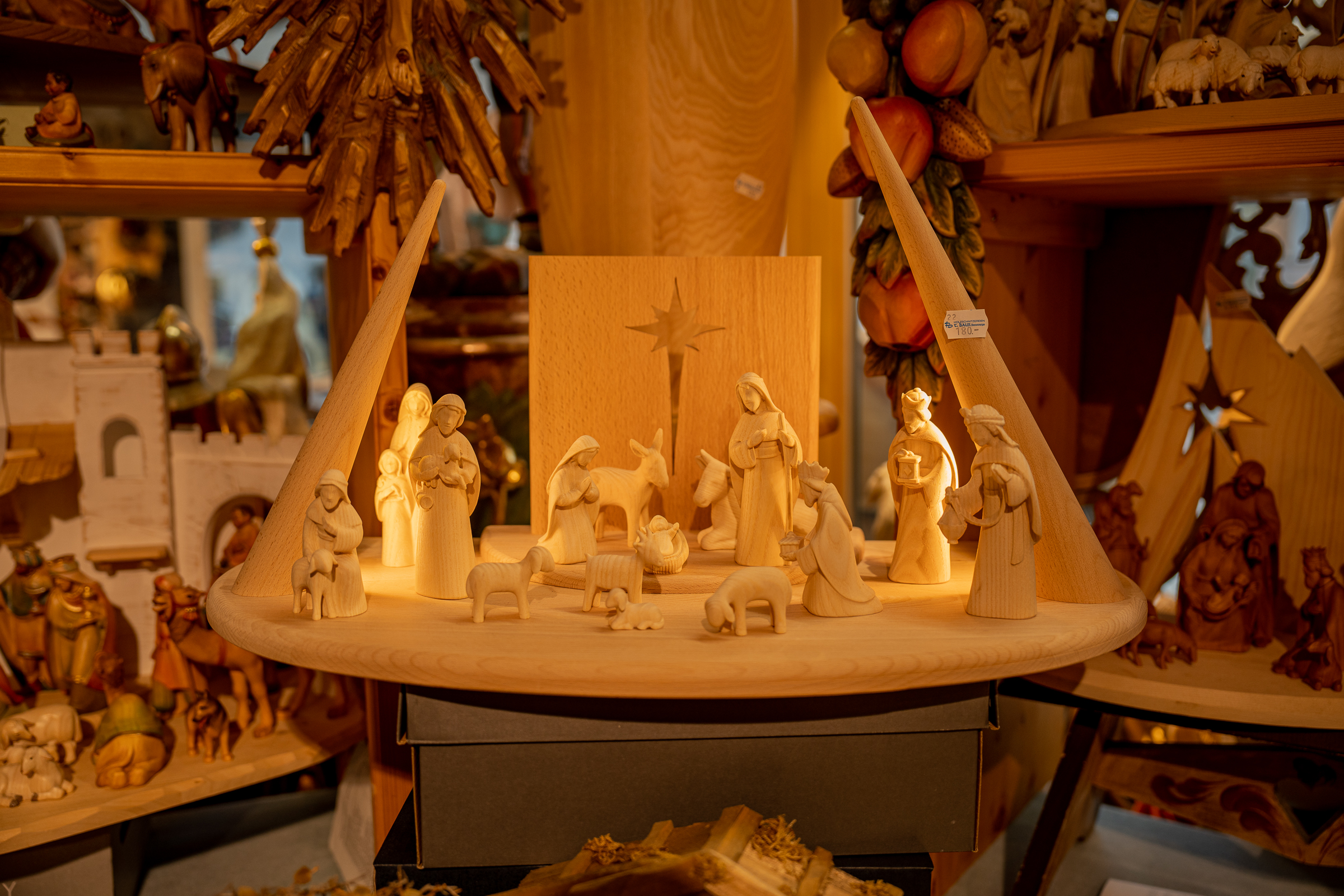

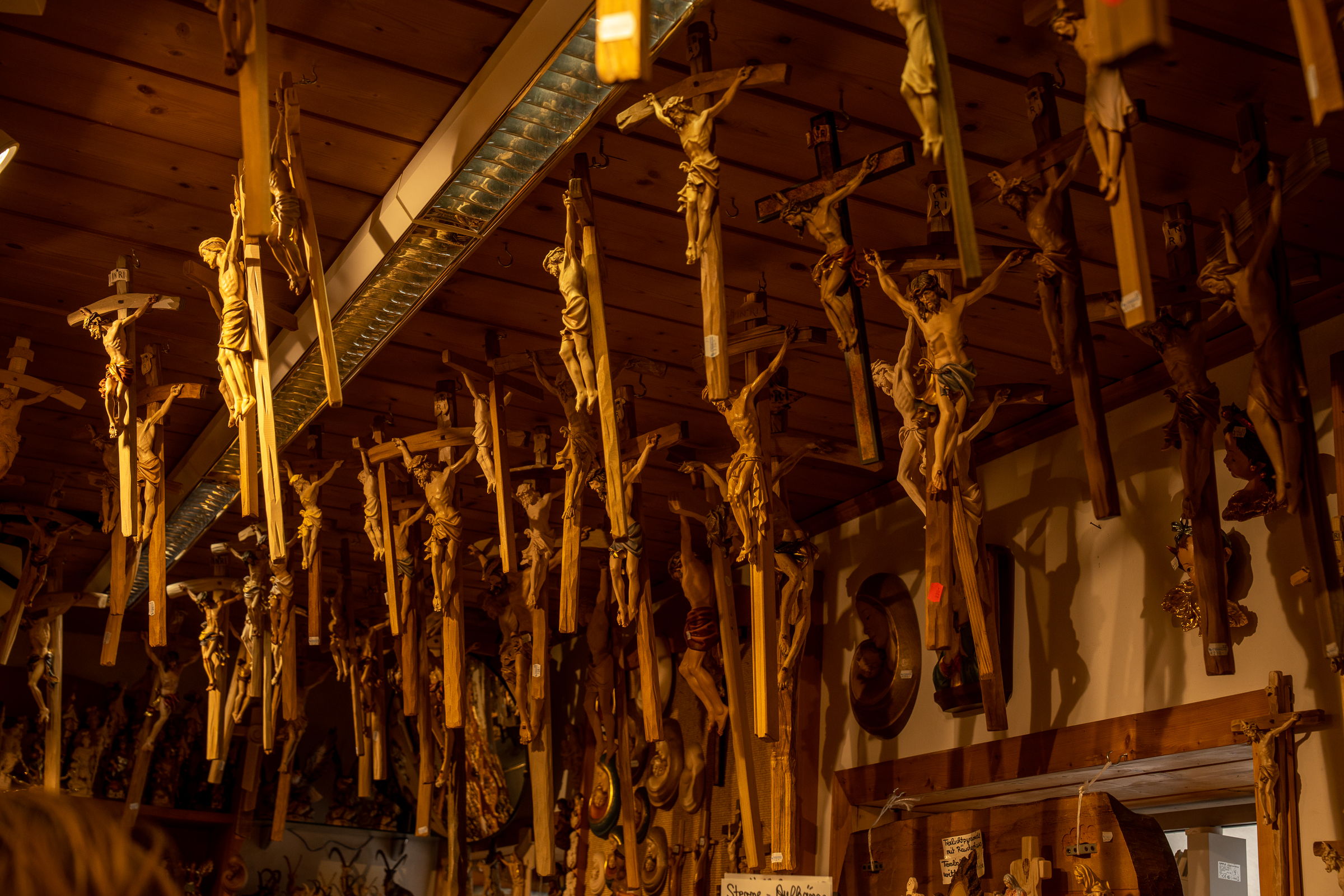
All manner of carvings that could be bought as reminders our visit were on display by the hundred. The nativity scenes are quite common in this part of Europe and I had bought one a few years ago in the Dolomites but the crucifixes in such quantity and variety of size are less common and it was something of a shock to realise just how many were hanging above my head!
It was in this shop that I was able to ask the person serving us if she was involved. “Not this year,” she said. “This year we’re helping my grandfather keep the business running.” She went on to say that she had been in two previous productions: it’s definitely ‘in the blood’ here. A look at the cast for this year’s play shows Pontius Pilate played by the manager of a local hotel, Mary by a flight attendant.
One of the books produced about this year’s production includes an interview with the young man playing Nicodemus – a theatre director by trade and a Muslim, he had been in the crowd scenes as a child but in 2010 was sitting in the audience and felt the urge to be involved again in future.
One of the interesting points made in the book Hope and Play – The magical making of the Oberammergau Passion Play 2022 by Sebastian Beck and Christiane Lutz is the effect the Passion Play has on the ordinary lives of those involved. This page from the book shows how the men must not cut their hair from the date declared by the Director.
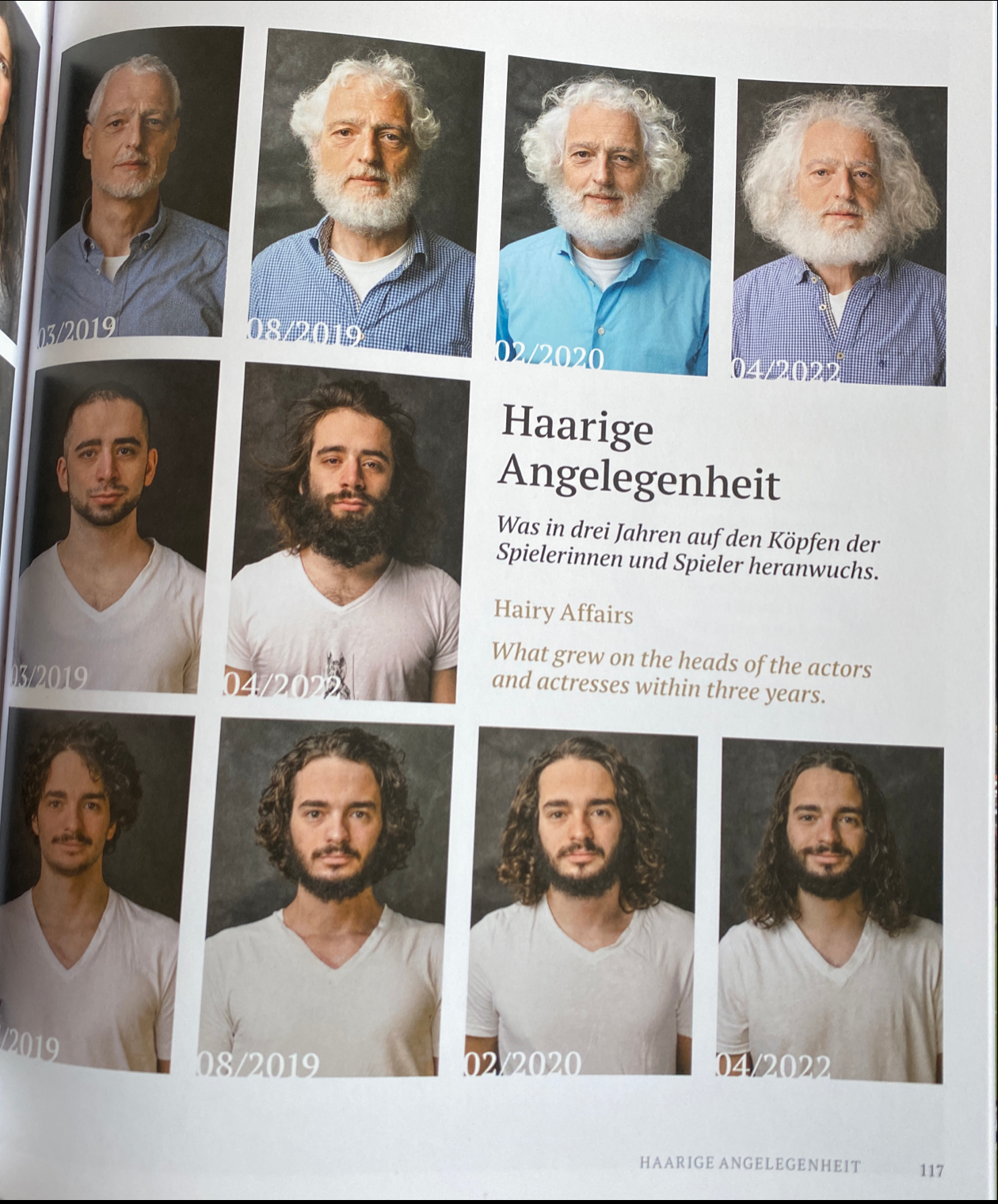
Many of the interviews describe how work and family commitments are built around the need to be at the theatre for a certain time: the hairdresser who works morning and evening in her salon, the couple who are grateful that the husband is needed for the afternoon and the wife for the evening so their childcare needs are met without depending on others.
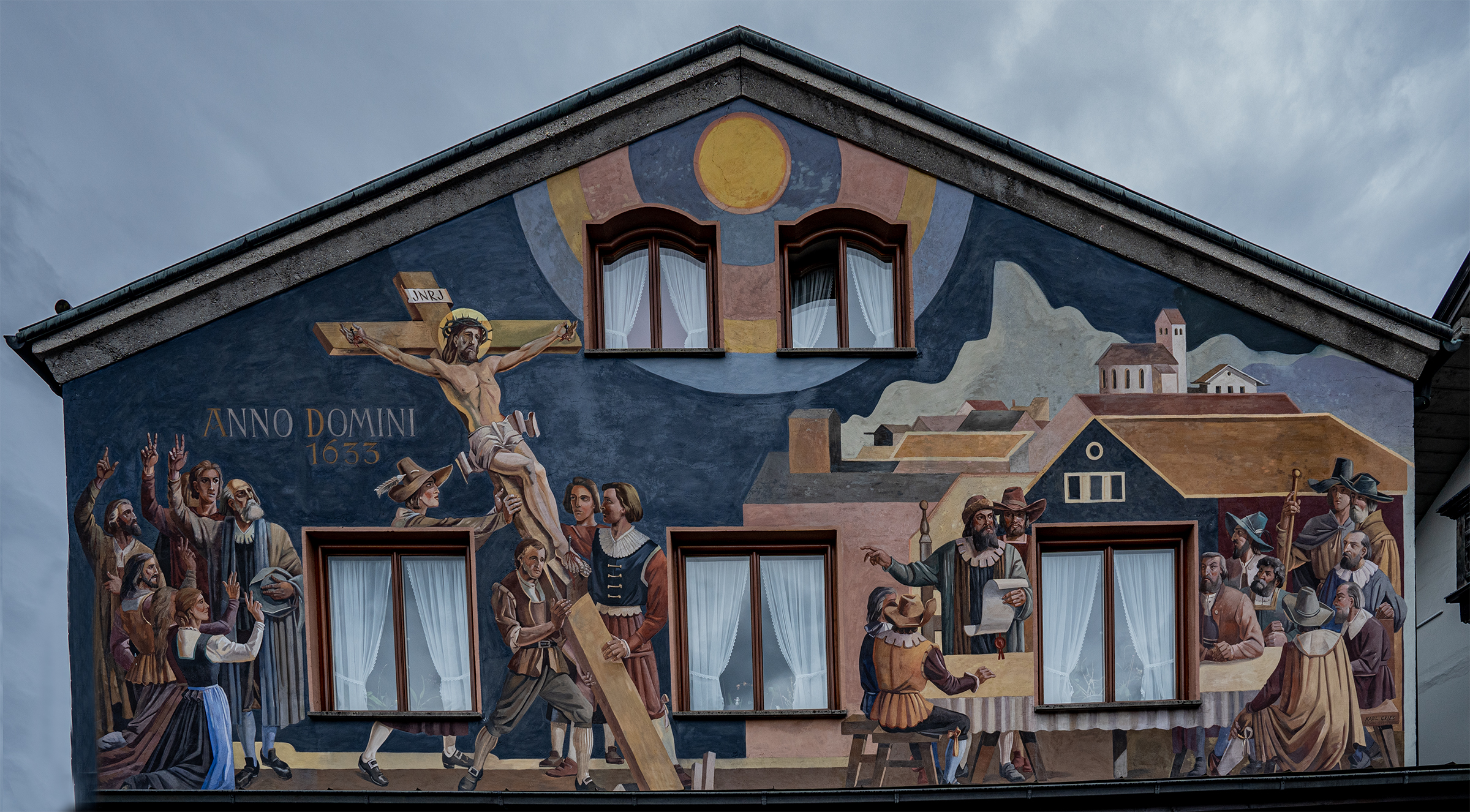
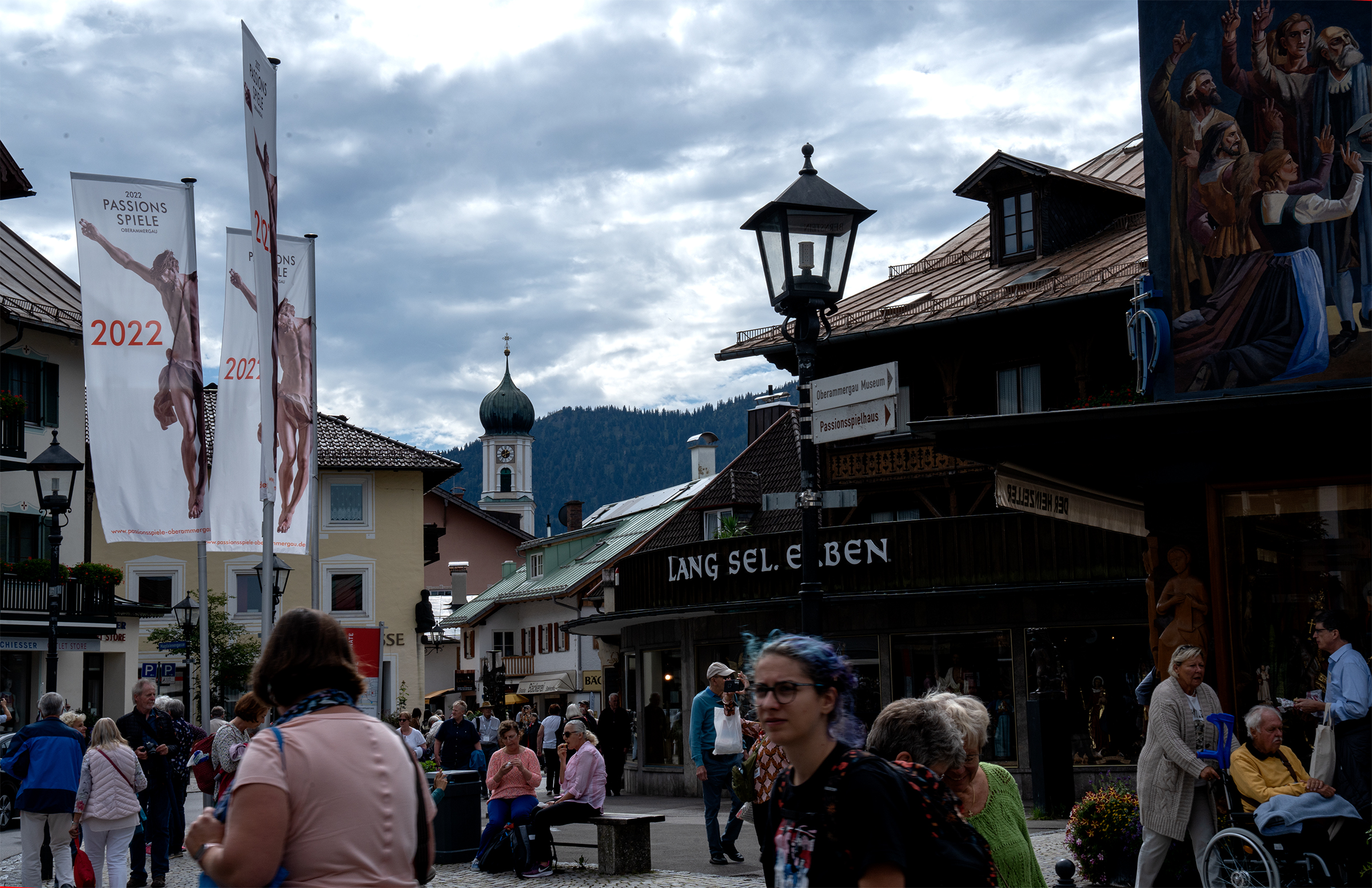
The village was busy as we sat eating lunch at a cafe in the square. Directly opposite was one of the most ornate murals and just down the road we could see the spire of the church where it all began.
We were ready for the marathon performance: starting at 1.30 and finishing at nearly 10pm – fortunately there was a break from 4 til 7 during which we were wined and dined at a local restaurant.
Back down the main street to join the gathering crowds. By now the sun was shining and we knew we would be comfortable in the theatre. We had ‘booked’ upgraded seats to be sure of a good view of the whole stage. We needn’t have worried. The seats are allocated by the local committee and we had not been successful in being allocated them: but our seats were amazing: right in the centre just two rows into category B.
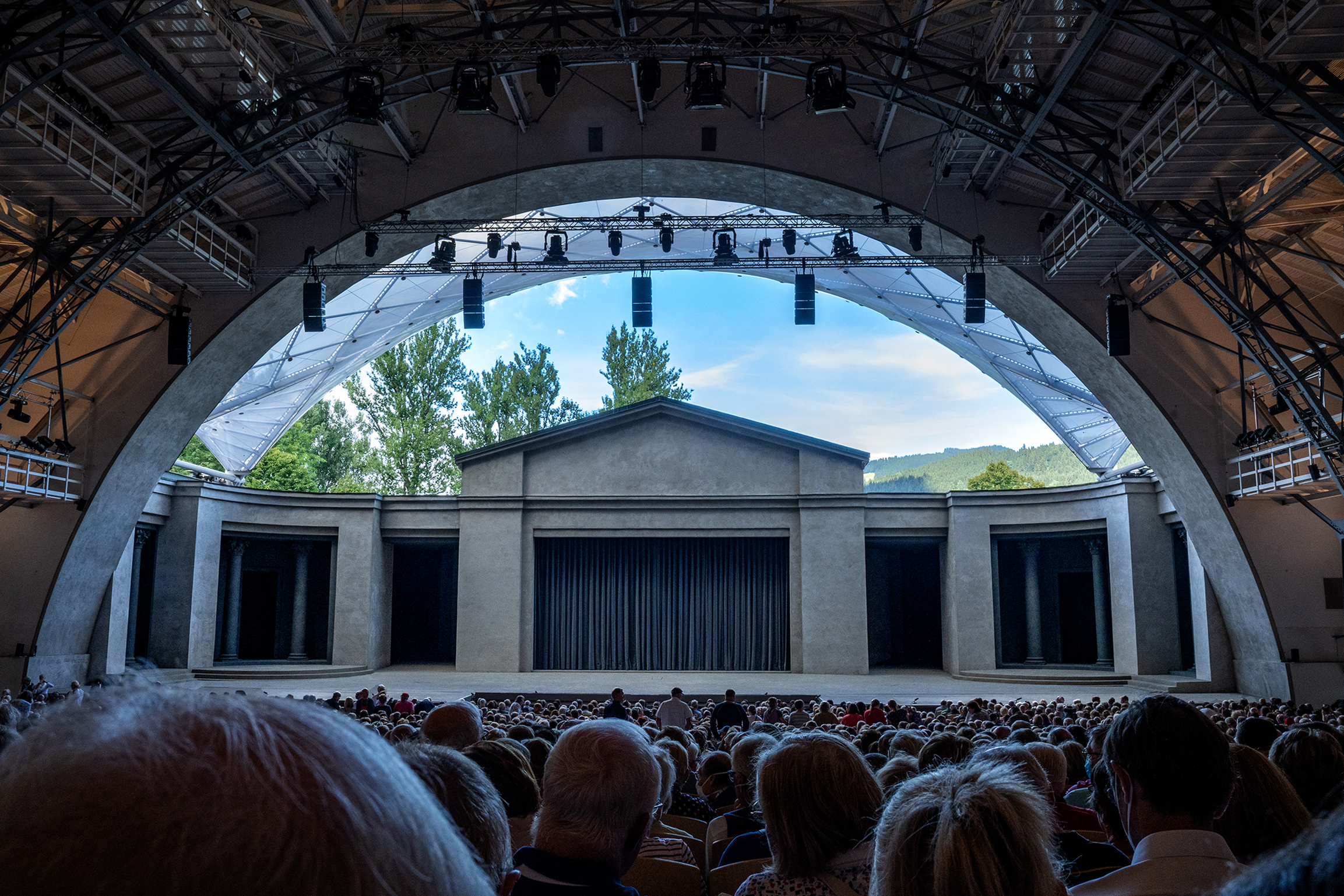
This photo gives you an idea of the theatre and the audience. Any others of the performance are from the official website (https://www.passionsspiele-oberammergau.de/en/home).
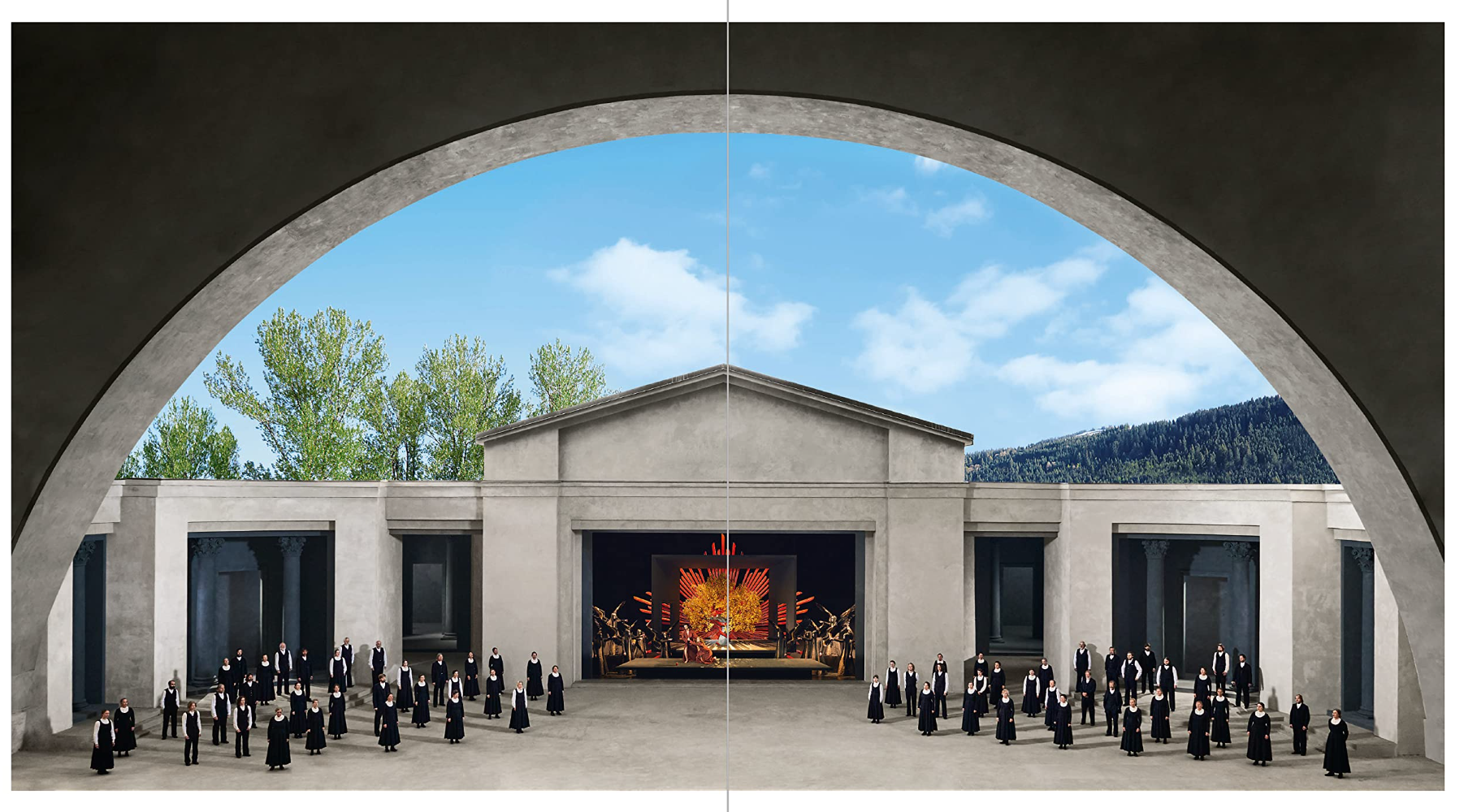
The ‘performance’ is divided between live action of the last week of Jesus’ life and some relevant Old Testament throwbacks which are ‘accompanied ‘living images’ accompanied by the choir.
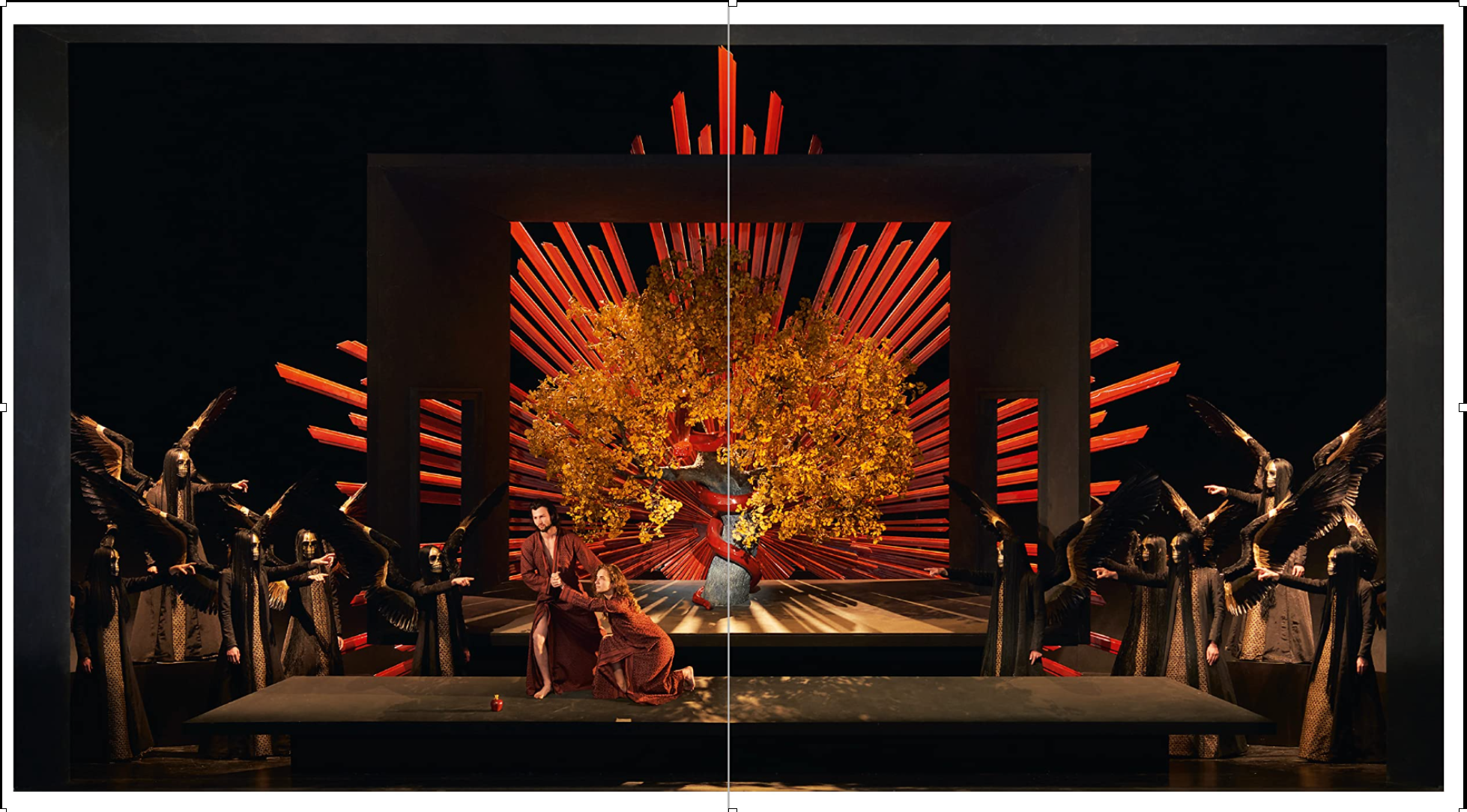
This closer view shows the detail – the first ‘living image’ depicts the expulsion of Adam and Eve from the Garden of Eden, making clear the innate sinfulness of man and his need for redemption: that’s what the whole performance is about.
We were particularly impressed by the crowd scenes. The very first action involves hundreds of people in the Entry into Jerusalem and the scenes depicting the trial and crucifixion similarly had hundreds on stage – children as well as adults. And even animals.

But these were contrasted with the simplicity of some central scenes where the words were as important as the action.
As far as I remember from a visit in 1984 (the 350th anniversary performances), the costumes were quite ornate and distinctively coloured. In the current production they are muted and do not distract from the action – though it did take me a while to work out that one character was an angel keeping watch over Jesus in the Garden of Gethsemane!
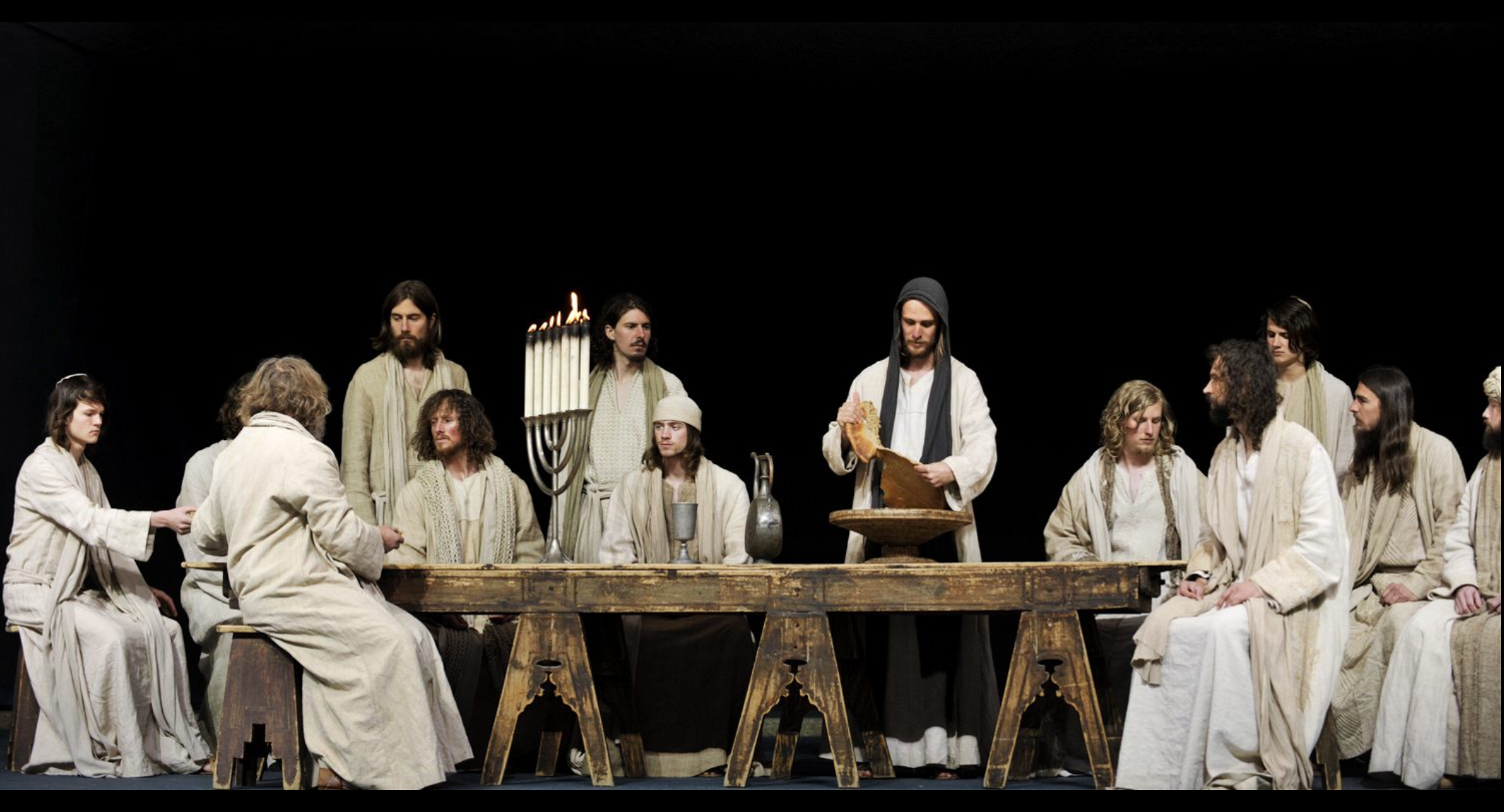
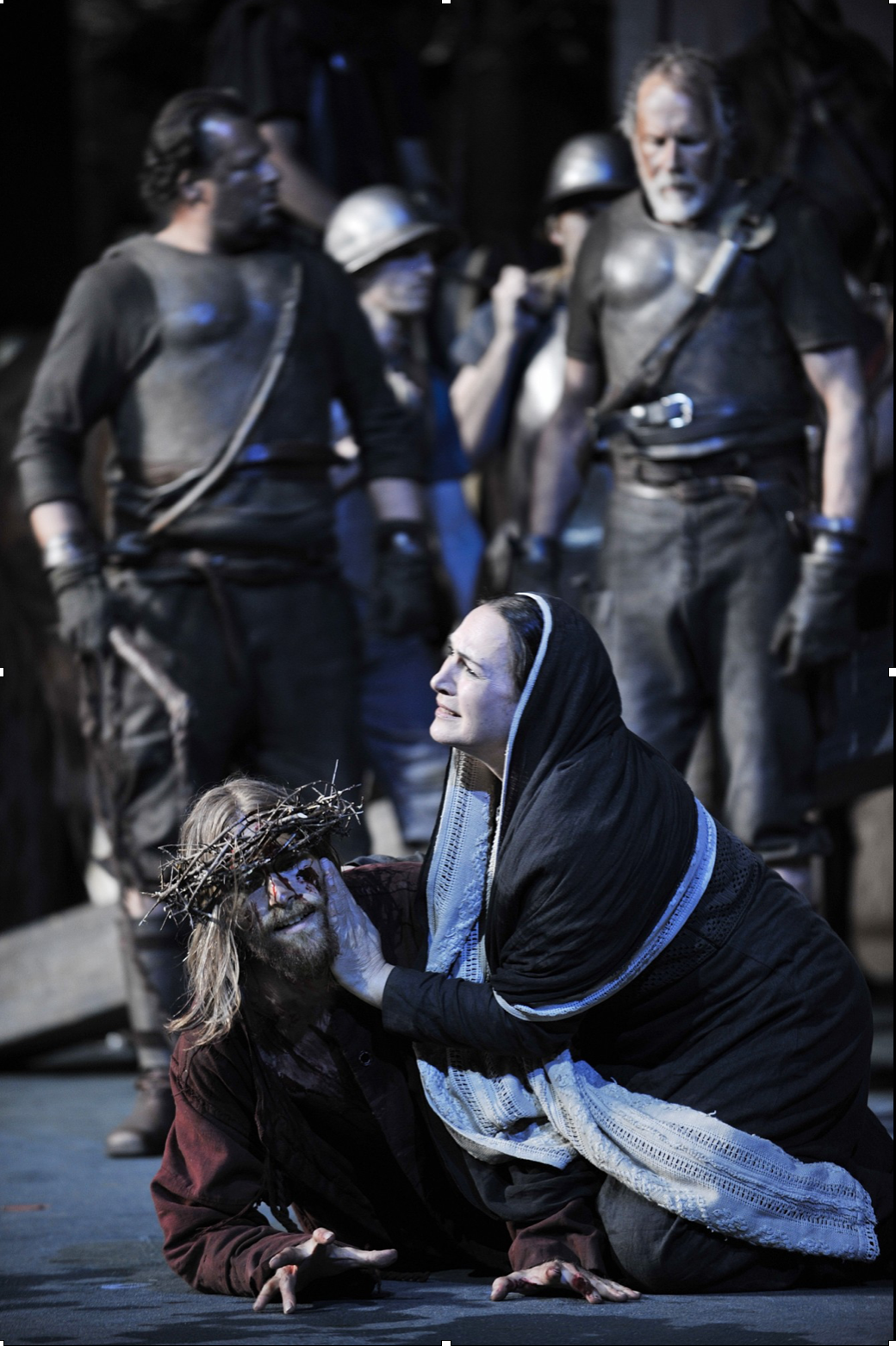
It’s difficult to remember that these are not professional actors – and a significant number are not Christian believers, setting out to spread a message which is important to them. Yet they made us feel we were there. I felt the lashes of the whip and the thorns thrust onto Jesus’ head. I felt for Him as He was mocked: that’s how He came across to me – a man who was unfairly mocked, perhaps even bullied, by the majority of people around him.
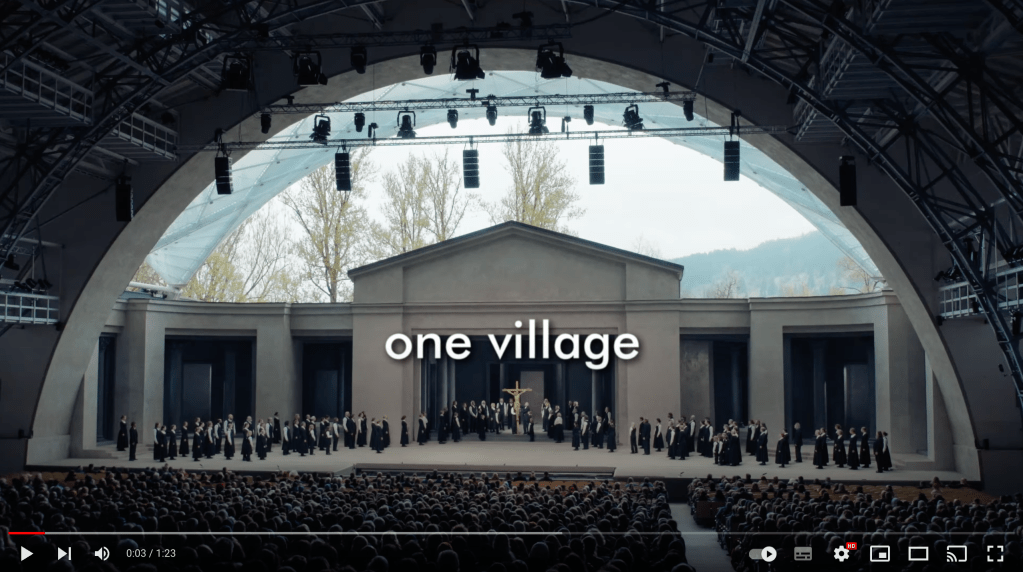
As the performance ends it’s dark outside and the scene is very different. You can see that on this official video from the website. Just click on the image to be taken to YouTube: don’t miss it. It will help you to understand why I describe this not as a performance but as an experience – one not to be missed at that.
 Living the Journey
Kath, a really full and lovely account of your experiences, great selection of photos too!
Looking forward to your talk at the Heritage Gallery.
Mike
Amazing and very moving!