Cruising the Glaciers and Fjords
The length of Chile becomes real when you know that it takes two days, averaging 15.5knots to get from Punta Arenas to Puerto Chacabuco and you still have three days before journey’s end in Valparaiso.


As we approached Glacier Alley, the clouds came down and visibility was limited. The only hint of the presence of glacial ice was the changed water colour. Gradually, however, the skies listened and we were treated to some classic glacier scenery with ice falling down to water level, looking just like frozen volcanic lava. The patterns were fascinating, sometimes looking like folded contours, sometimes like dirty Christmas cake frosting and all set off by the blue, blue ice.
All too soon it was over and we resorted to enjoying what the ship had to offer as we sailed towards the next port.
Puerto Chacabuco
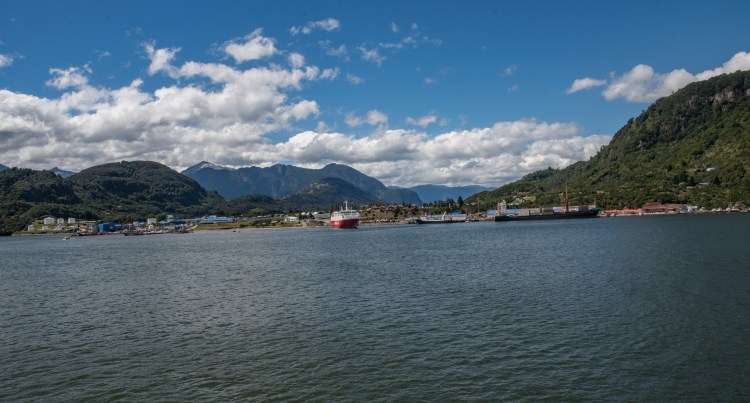
There is nothing here except a small community of houses at the end of a very attractive fjord. Apparently, the fjord silted up and a new port had to be built so tours are essential to discover the countryside and the local capital, Coyhaique.
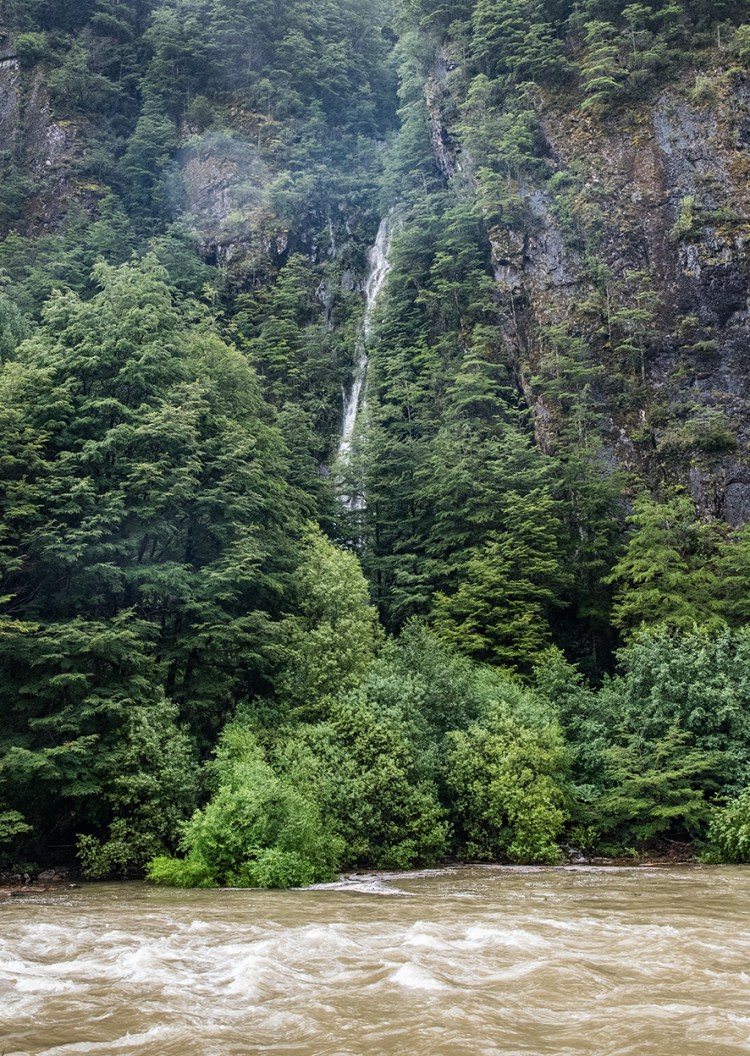


The town is tiny – 55,000 population – houses are very simple, but there are lots of cars because local residents are part of a trade agreement with some Asian countries that lets them buy Japanese cars at amazing prices. But the cars must be kept in the area. Having stopped at a viewpoint and at the Rio Simpson National Park we drove beyond Coyhaique and were treated to a delicious ‘snack’ – empanadas, skewered fruits and meats and chocolate cake, together with local wines and pisco sours – at a local restaurant with beautiful views.


Chiloe
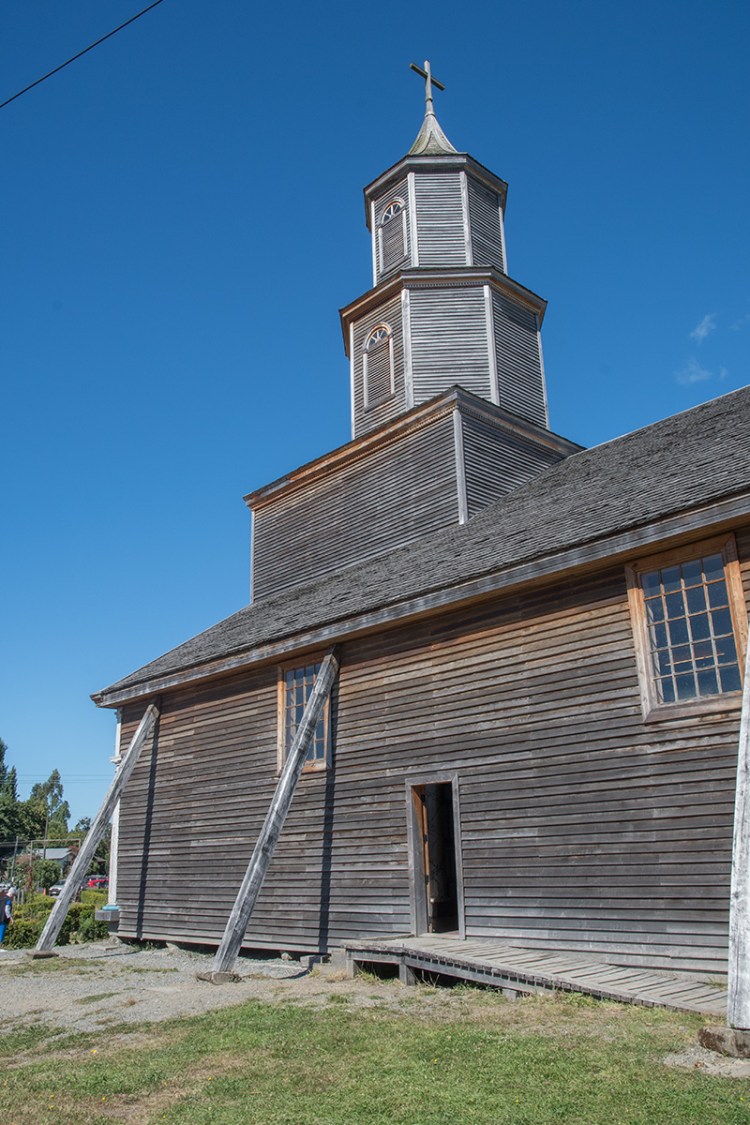
South America’s second largest island after Tierra del Fuego has a character all of its own. It was populated with churches by the Jesuits early in the colonisation by Spain and each of those has its own character too.


All are UNESCO World Heritage sites which is unsurprising as they are very basic metal sheets on the outside which then open on to some lovely carving and more permanence on the inside. There is little option but to choose a ship’s tour if you want to see anything in the time in port. I opted for one which visited a few of the churches but also allowed for time in the small city of Castro – the capital before returning to the ship in mid-afternoon.


It was fun to wander the small central square on a Saturday afternoon and watch the locals relax, some (like us!) sampling free local seafood, others preparing for an evening concert which looked as if it might be THE place to be with young backpackers gathering for the evening and ‘chilling’ together. Food portions in the corner cafe were enormous – such that a shared hamburger was more than ample for lunch, especially as there was cake and an excellent coffee waiting a little further down the road to the port.
Our guide was of German descent, a local farmer who had moved to the area some thirty years ago. He was proud to be part of Chiloe and was a fount of information on local traditions when we visited the small folklore museum in Chonchi.
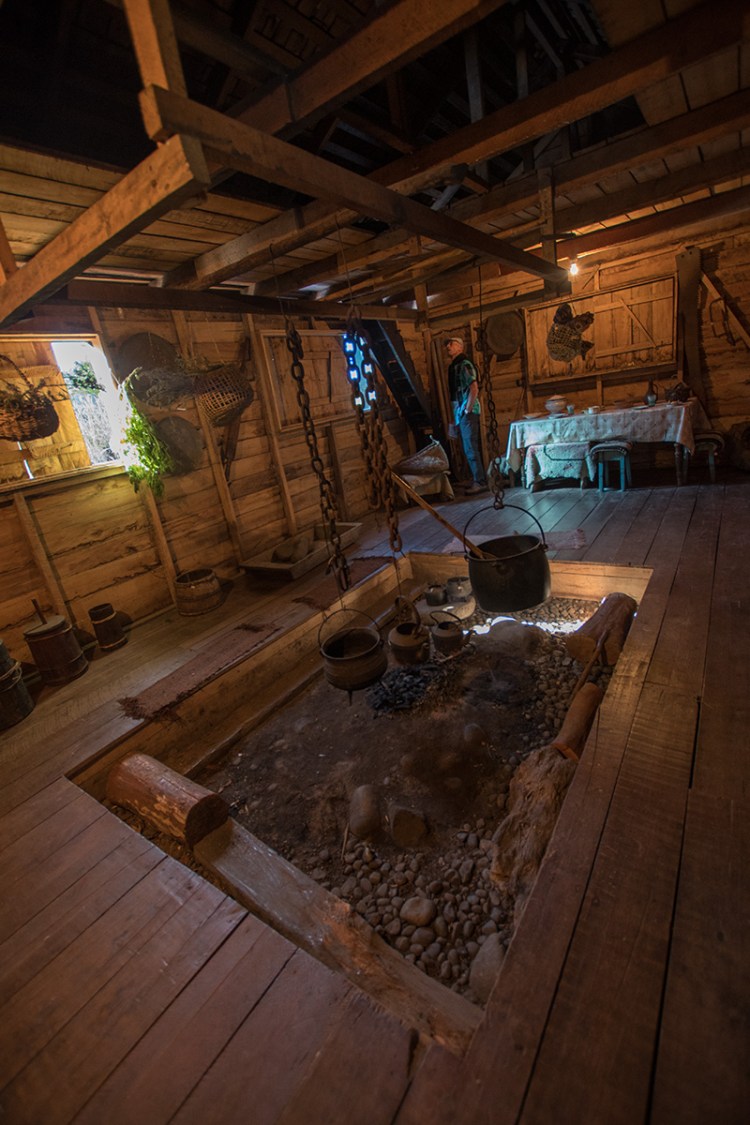
Many of the buildings on the island are wooden and at least one of the churches reminded us of the wooden churches in Russia with their delicate shingled exteriors.