Renowned for its wildlife, Etosha covers a very large area of Northern Namibia and was set up as a national park in the mid- twentieth century. Currently, though, the unusual weather seems to be creating different patterns of behaviour in the animals.
We saw towers of giraffe – Southern giraffes, differently marked from those in Kenya and Tanzania, dazzles of zebra and herds of springbok and impala as well as ostriches, kudu, oryx and, in the whole three days just two elephants. The park looked very green and puddles on the road led us to think the waterholes had become redundant :there was enough water around naturally after some heavy rains so the animals’ needs could be met closer to home. We saw a cheetah chase and watched some lions relaxing in the shade on the morning we left but what struck me most was the amount of animal behaviour we saw: whatever we saw was actively doing something and interacting with the other animals around.
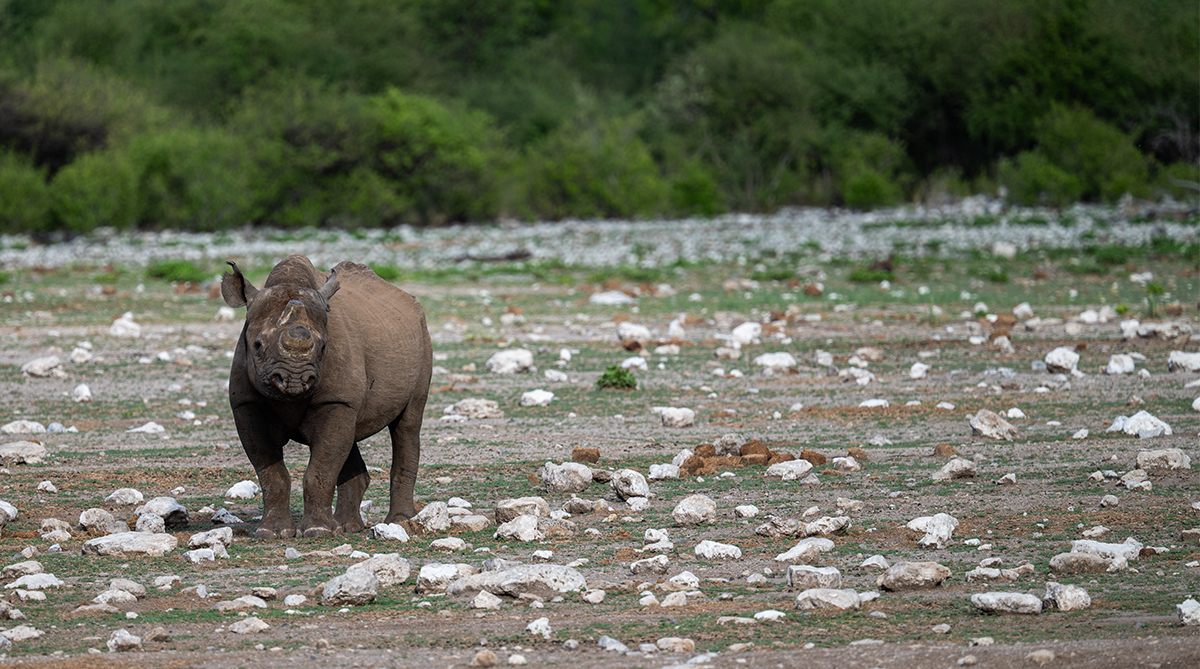
On the first evening we went to a large waterhole and the first thing we saw was a black rhino: there was clearly something about us that he didn’t like. He snorted, stamped his foot and began to move fast towards us. The roof was up and everyone held tight as the driver prepared to move away from the apparent danger. Fortunately for us, the rhino thought better of his idea and made off in another direction! The waterhole was what he’d come for.
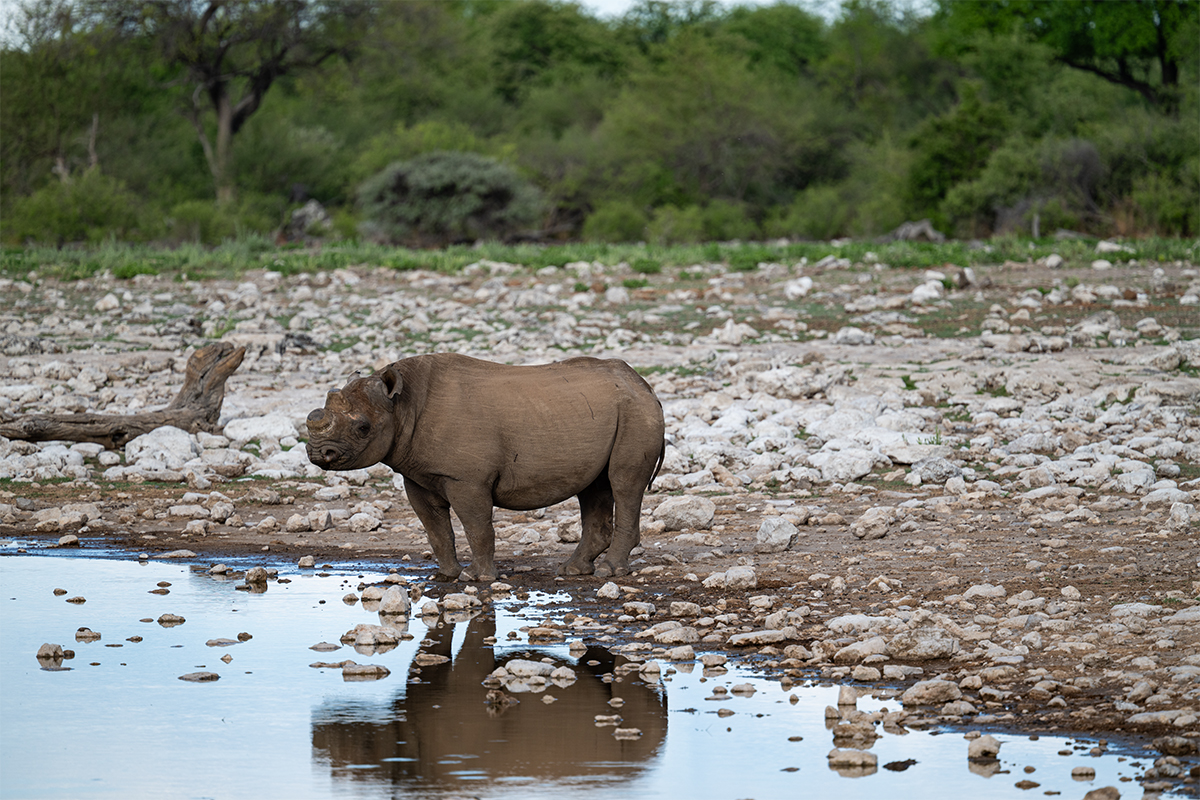
Looking at him as he drank we saw that his horns had been removed and there seemed to be a few injuries. The horns are taken to protect the animals from being hurt by poachers but it’s very strange – and somewhat sad – to see a hornless rhino.
The seal-like log in this photo reminds me that, from time to time we suffered fits of pareidolia where all kinds of things took on a different existence: we saw angels and birds in clouds, seals and monitor lizards in logs and just about every animal in rocks as we drove by. It was easy to mistake bushes for the animals we wanted to see and sometimes, strange as it may sound, to see ostriches or wildebeest in the distance and think they were elephants.
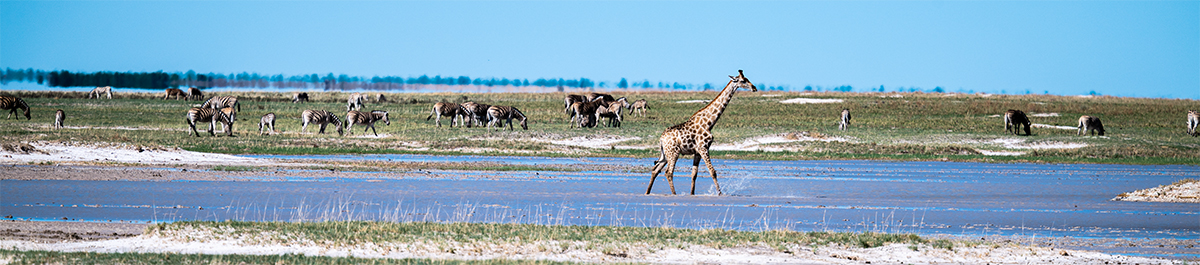
I don’t think I had ever seen a giraffe paddling before: but they all did here! As did the zebra, wildebeest, impalas and springboks.
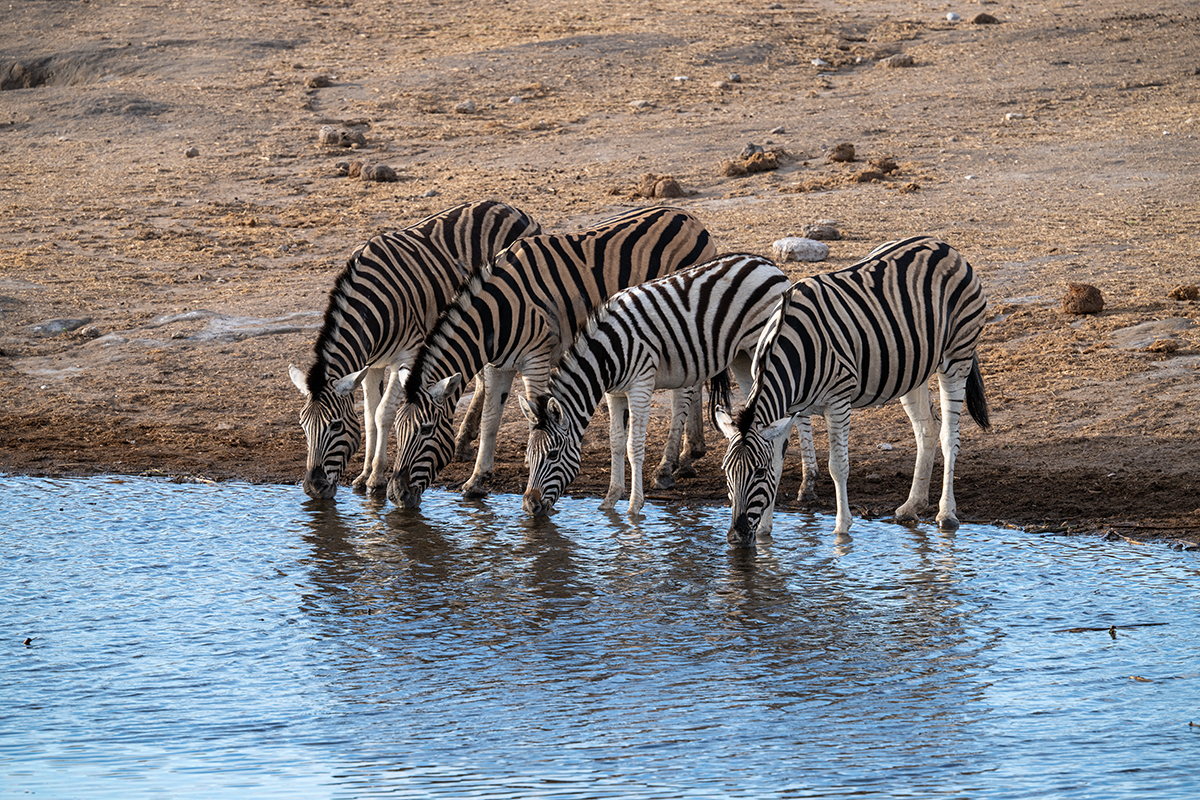
The zebra obliged by coming to drink at a waterhole as we watched, too.
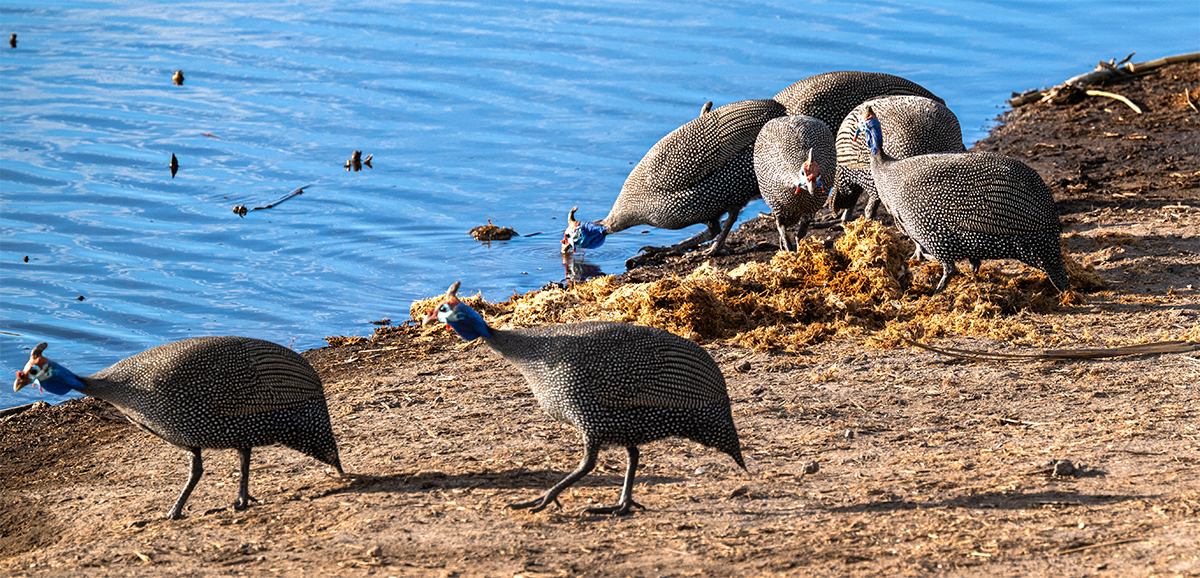
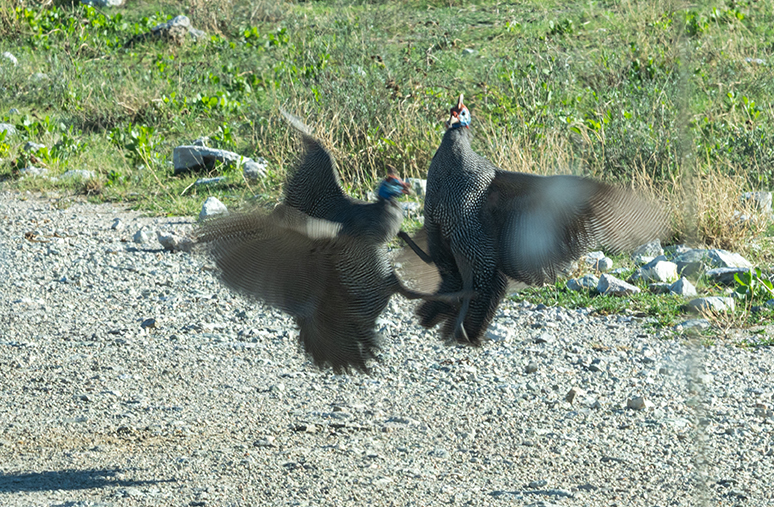
The guineafowl seemed to be everywhere we were. One day we saw a whole group of them running around in circles and then fighting- I’m not sure we ever established why!!
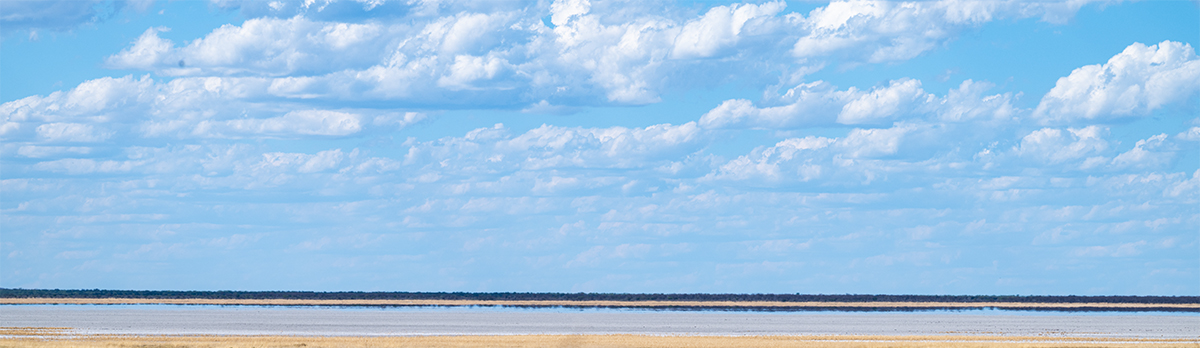
The colours of the Etosha pan, with or without clouds, kept us interested as we looked at abstracts and colour combinations.
But it was even better when the lone ostrich appeared walking determinedly through the tracks of others.


I think we actually came across more wildebeest and zebras than we had seen in the migration in Kenya a few years ago – there were hundreds!
And two final treats as we moved to another area:
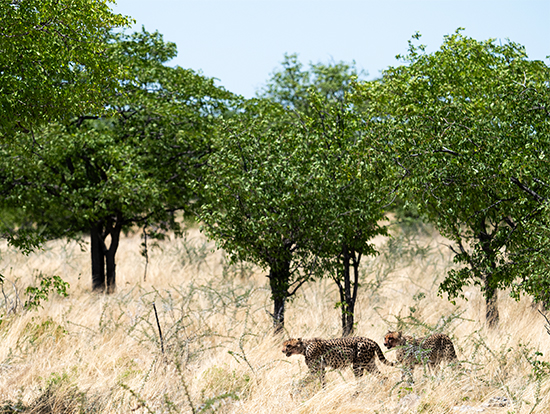
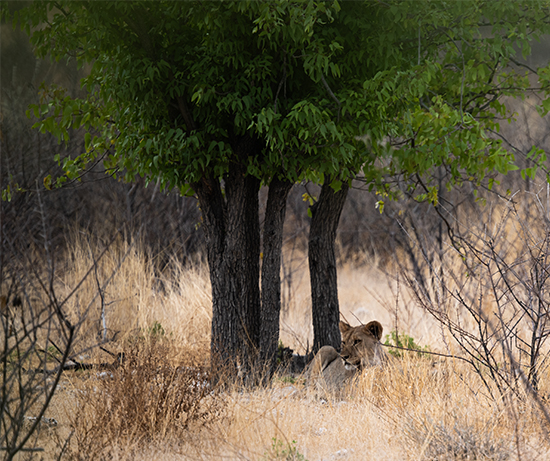
First, a cheetah stood up out of the bushes to catch a small impala some distance behind us and then a small pride of lions appeared under a tree. For elephants, we had to wait until later in the evening at the Okuakuejo waterhole (the one that has a live stream) where seventeen elephants appeared.
With that our time in Etosha was at an end and we were moving on – further south now to the Erongo Mountains National park.
 Living the Journey
You have certainly seen a large variety of animals, Kath! How great that there was lush vegetation and plenty of water which must be much appreciated by all the many animals that you saw! I am enjoying your images!
Beautiful! Have a nice trip!