
Much of our first day had been dominated by a distant view of the Alhambra and, for most visitors, this Moorish complex is the prime reason to visit Granada.
We met two couples who had expected to be able to visit the complex but were disappointed because tickets are sold out months in advance.
The advice we had been given was to gain access as early as possible in the day, so we had all managed to get tickets for 8.30a.m.. Further, we had been told we should get to the entrance early.
To be at the front of the queue we booked a taxi for 7.15, assuming we would join hundreds of others.
Most in our group had bought their tickets direct from the official website and I thought I had… but there had been a slight niggle that maybe I hadn’t….those niggles increased enough for me to download our tickets before leaving home. On the morning, we followed the instructions on the Al Andalus email and went up to the Top Tour office – to find it closed. Enquiring at the hotel next door we discovered from the receptionist (who looked as though he may often be asked the same question!) that the office didn’t open until 8.30a.m. – when we expected to be entering the Alhambra complex. Downloading the tickets had paid off, though – they were genuine and did give us access. So we joined the others at the head of the queue and were the first in that morning.
To avoid my non-tech savvy error, book your tickets at https://tickets.alhambra-patronato.es/en/. And, to avoid the disappointment of our Belgian friends book them as far in advance as you can.
The sun shone as we wandered through the old palaces with their ornate carvings and latticed windows. Areas of warmth and of shade were appreciated as they must have been by those who lived there. And, pleasingly, we didn’t feel hassled or overcrowded, managing a few photographs devoid of other visitors.
The basic ticket provides a timed entry to the Al Nasrid palaces. Most of our group had 8.30 which means a quick sprint from the entrance as they are a 15 minute walk away. Our time was a very sensible 10.00 making it possible to wander down slowly enjoying the (fairly) early morning light and the gardens and views along the way as well as meeting the need for caffeine (best coffee ever in the square past the Wine Gate – and probably the cheapest, too at 2 euros a glass!) before joining another queue….. and getting ready to produce photo ID again. We did actually see a Japanese tourist declined entry because he didn’t have his passport with him – and that would likely mean no entry to the most significant palaces as the timings are tightly managed.

Walking through the gardens to the entrance, the light made us more and more aware of the manicured hedgerows and flowerbeds and the amount of work that must go into maintaining this environment.
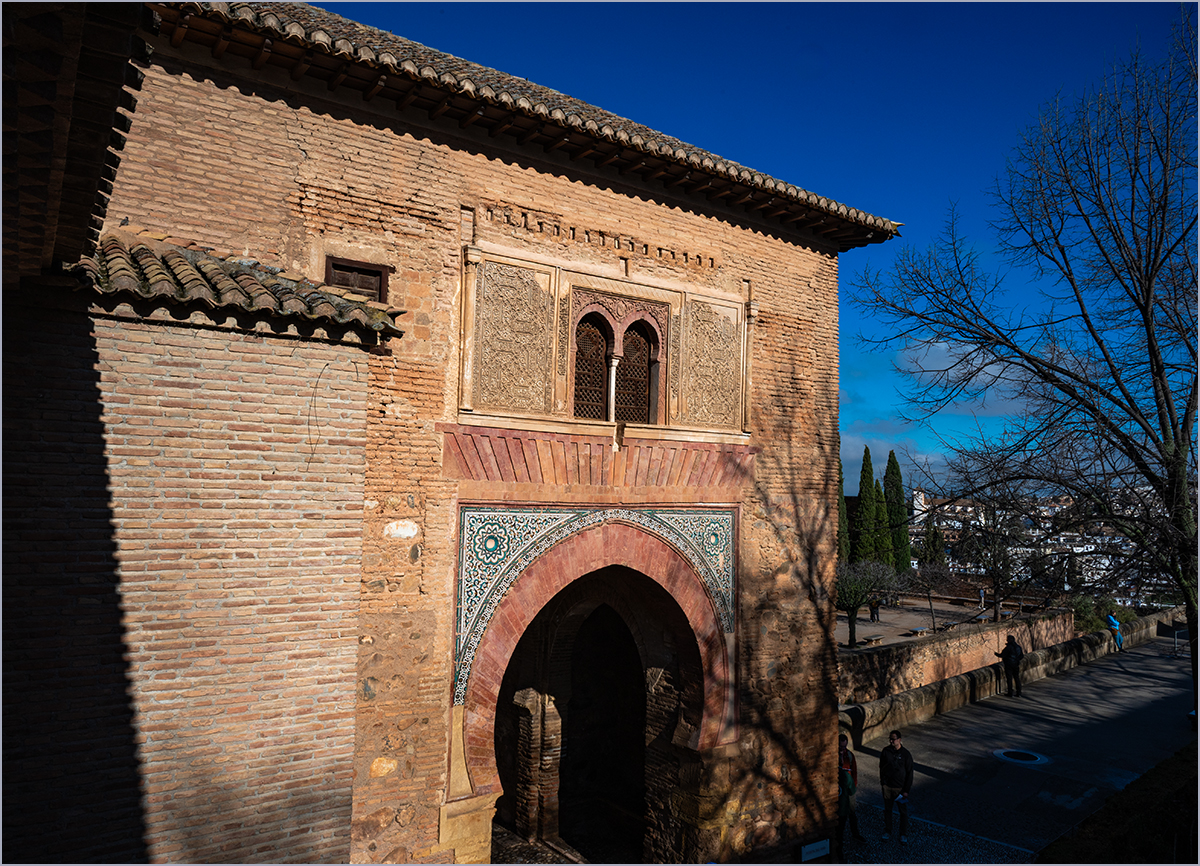
The Wine Gate may date back as far as the time of Muhammed II, the second Nasrid ruler (r. 22 January 1273 – 8 April 1302). While it supposedly got its name from the fact that since 1556, the neighbours of the Alhambra left at this gate the wine that they drank and which was not submitted to taxation, there is another theory, according to which the name is the result of a mistake. Apparently two words got muddled up: «Bib al-hamra’», meaning Red Gate or Gate to the Alhambra, which would be the original name of the gate, and «Bib al-jamra», meaning Wine Gate. This second theory would then prove that this was the access gate to the higher Alhambra.
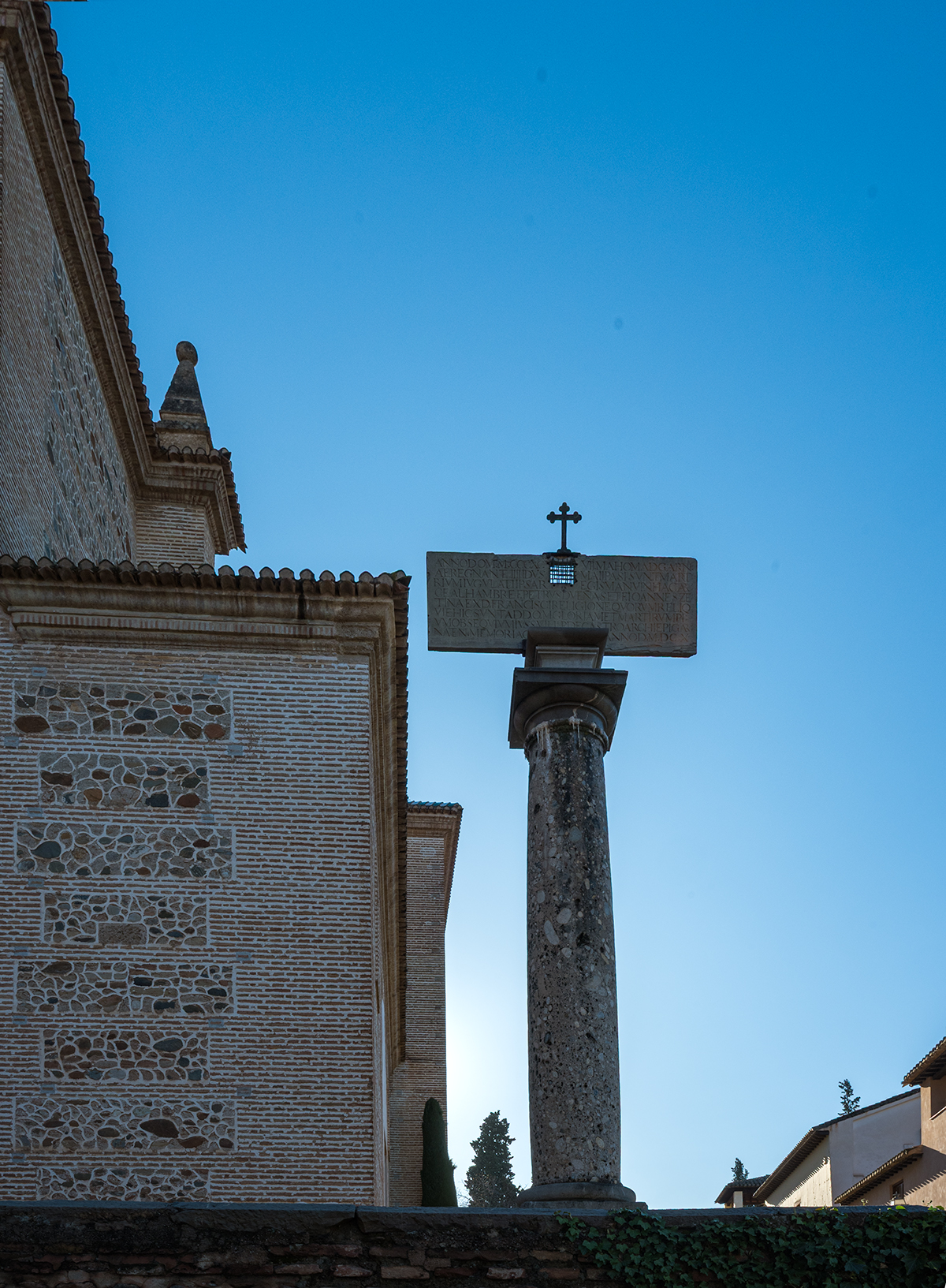
And the cross high up on the pillar indicates the place where the bath-house became the church.
It was easy to just soak in the history of these buildings, to consider what stories they must be able to tell and to enjoy their artistry.
The Nasrid palaces are particularly renowned for their patios/courtyards with fountains, flowing water, cooling marble sculptures and exquisite Moorish decoration.
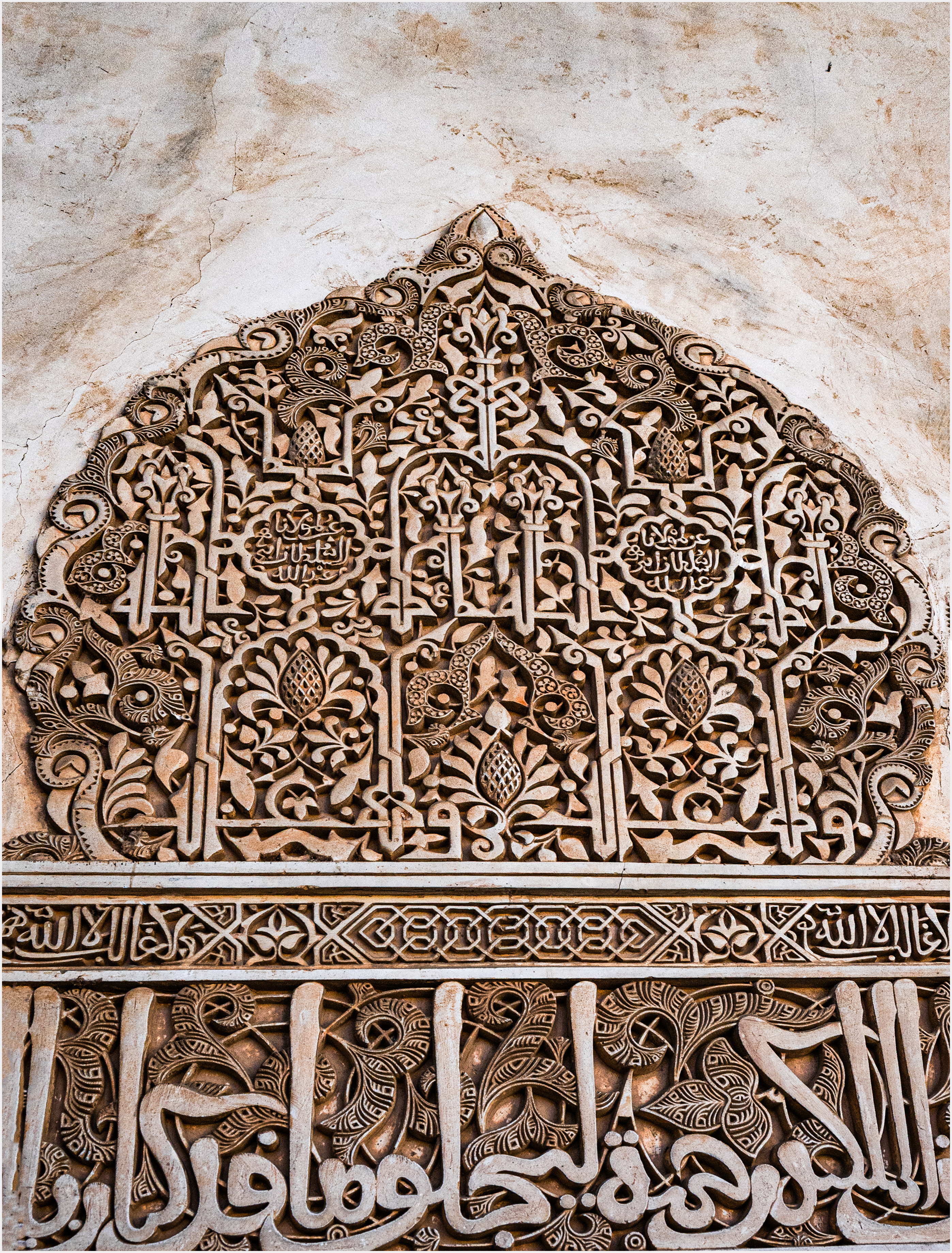
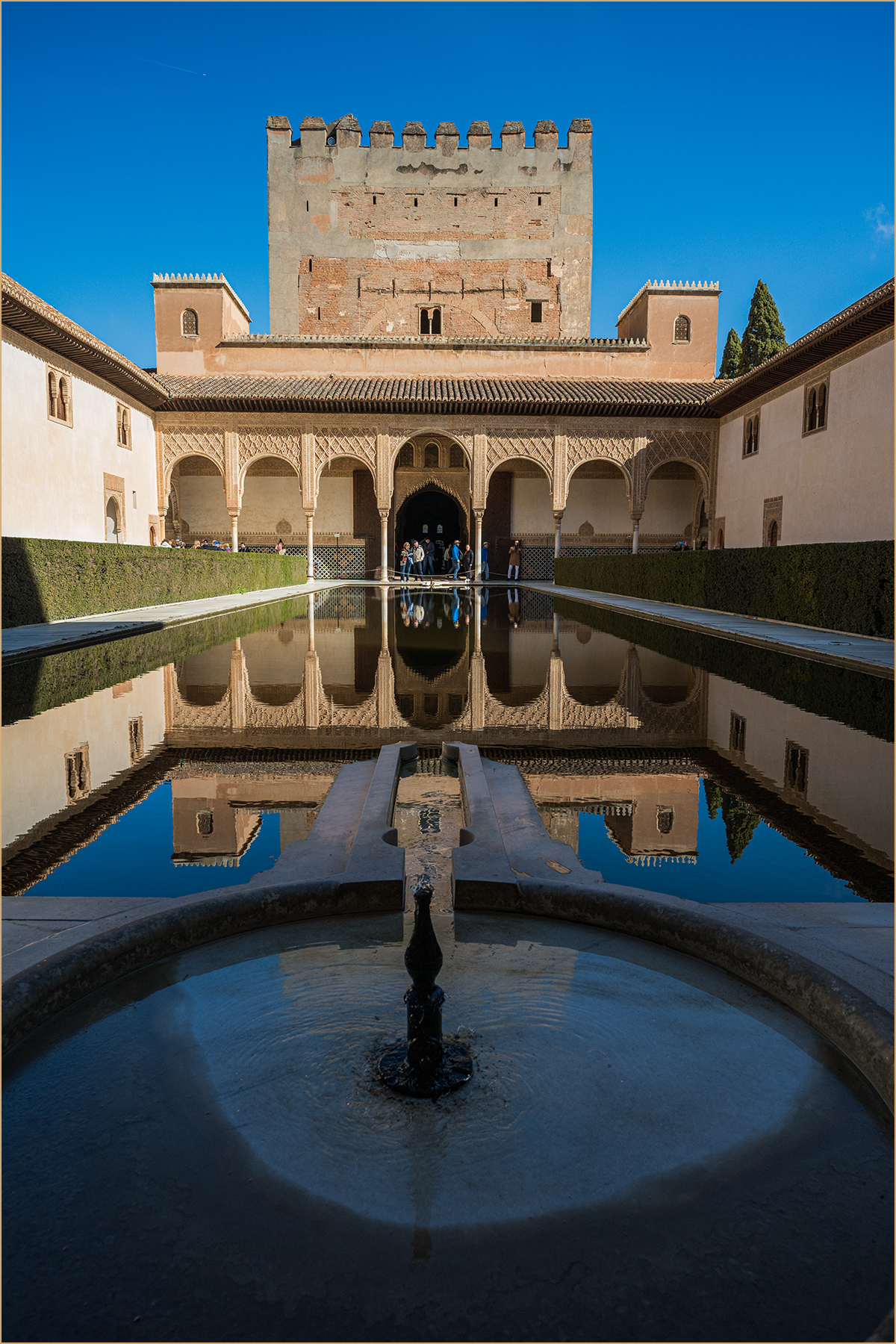
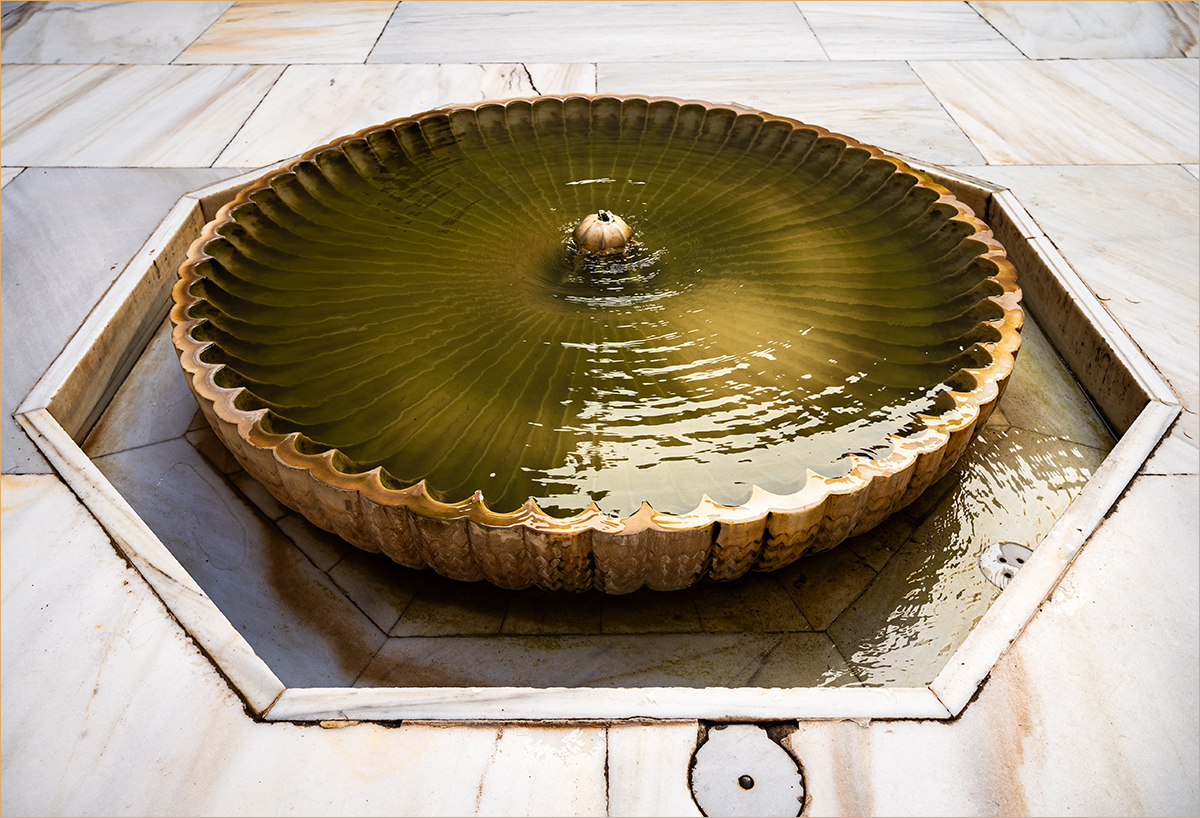
And this is just the start!!
Most famous is the Lion Patio and we were delighted to find it possible to take photos that were not always full of tourists!
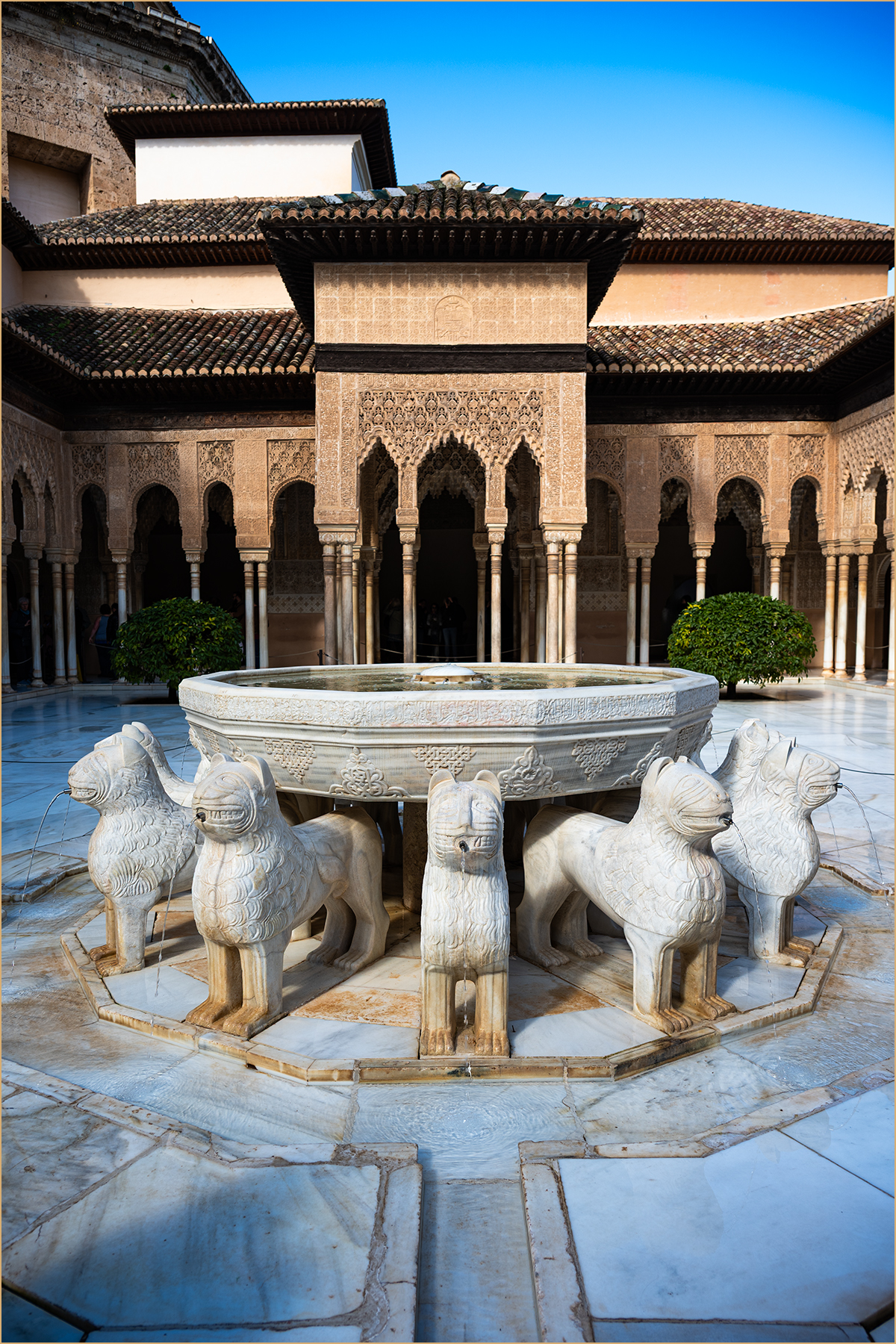

This patio was built by order of Mohammed V (1354-1359 and then again from 1362-1391), its ground plan is rectangular and it is surrounded by a gallery in the style of a Christian cloister. The gallery is supported by 124 white marble columns with fine shafts. It is called the Lion Patio because of the twelve lions that throw jets of water and which are part of the fountain in the middle of the patio.
None of the water features were flowing very freely, but then I remembered there had been a total ban on the use of fountains in Barcelona in October – maybe there were similar restrictions here.
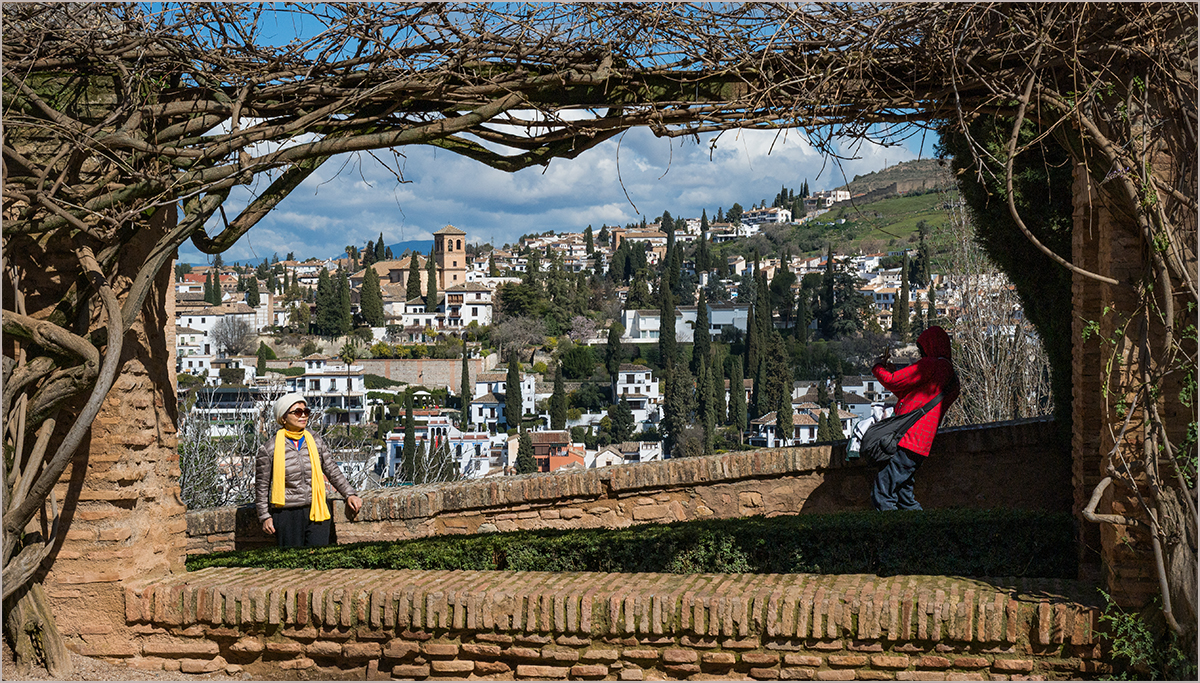
Out into more manicured gardens past Asian tourists (usually Japanese or Chinese) being sure to ‘capture the moment’.
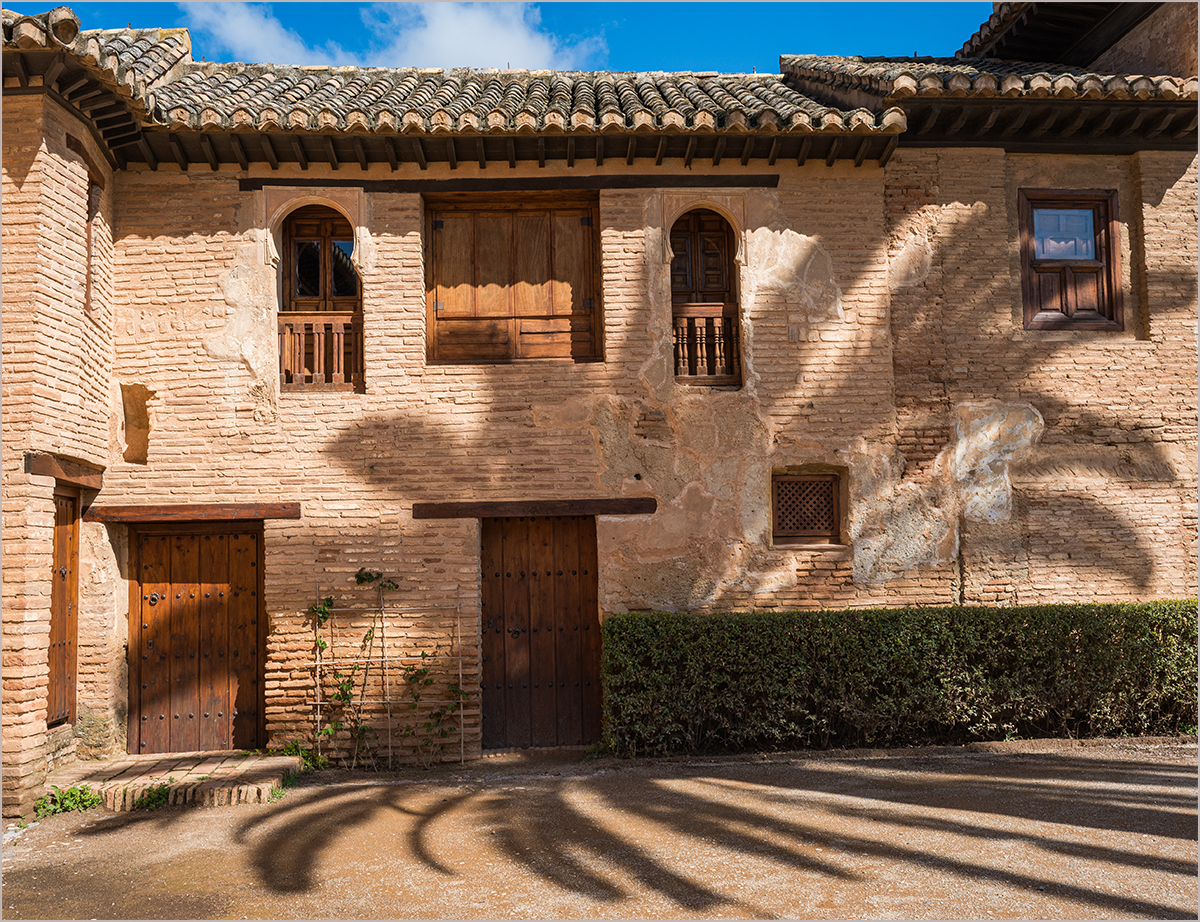
I loved the way the shadow of the palm fell over this house. Although these are not the ‘right’ palms for Jerusalem, they did keep reminding me that Palm Sunday isn’t far away!
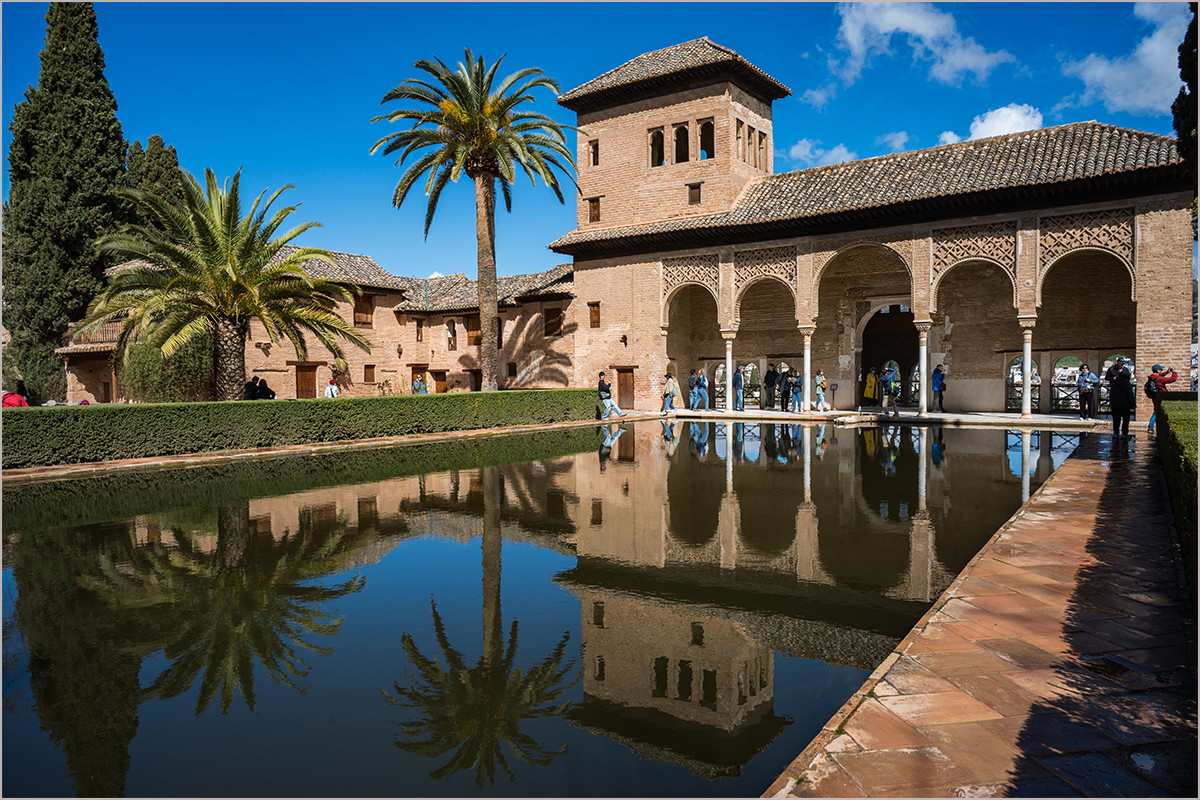
By this time the number of people in the palaces was beginning to increase and we were ready to make our way to the Alcazaba – the oldest part of the complex, originally built as a fortress – and were glad to be able to appreciate the views from these towers before making our way up to meet the others at The Parador – a hotel and restaurant within the complex where we could have a leisurely lunch and decide on the plan for the rest of the day, Sitting on the terrace overlooking the views of the city was just the right way to relax for a while before tackling the Generalife gardens and then the hill down to the city (though I opted for the bus at that point!)
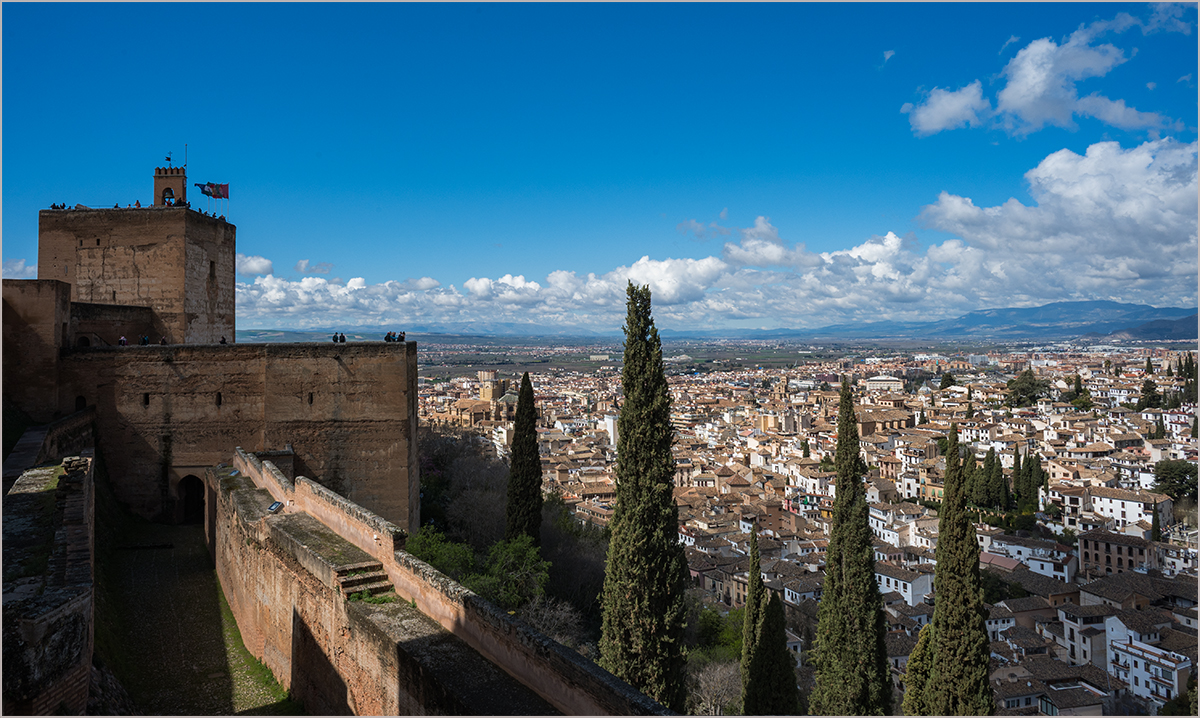
What an ideal location for a garrison the Alcazaba was: 360 degree vision!
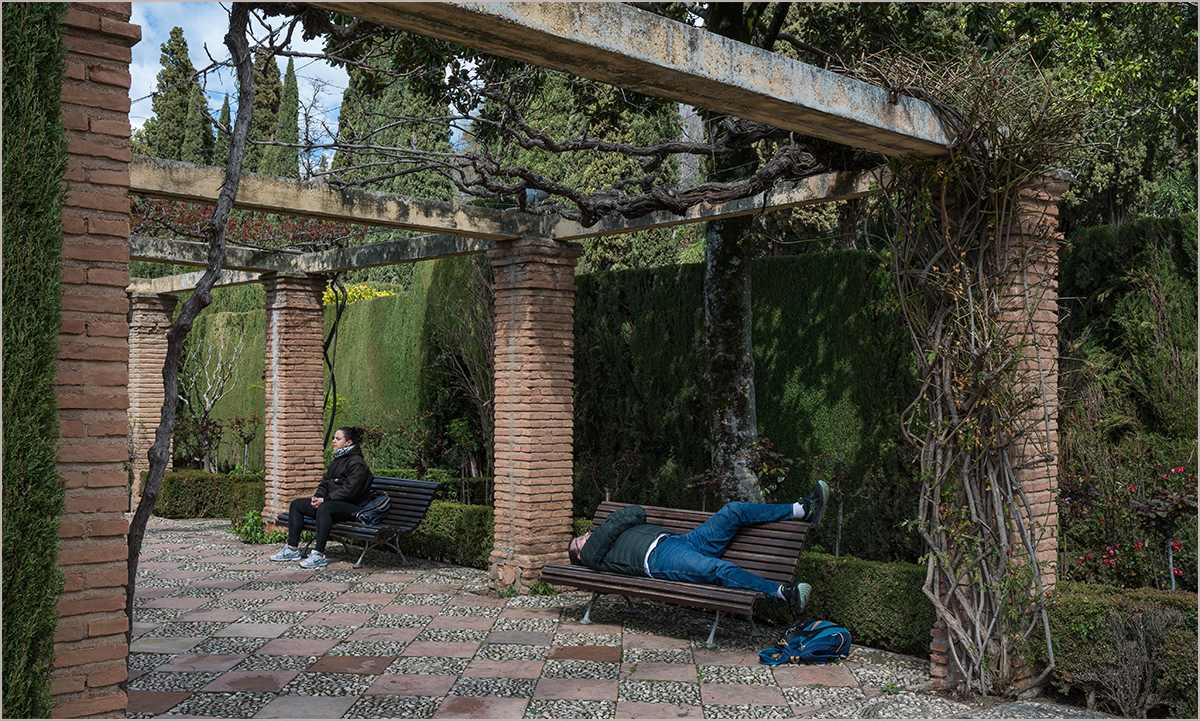
Here visitors were keen to climb the towers to see the panorama below: later in the day we would find less active visitors sitting in the gardens – some sleeping even – and just making the most of their surroundings.
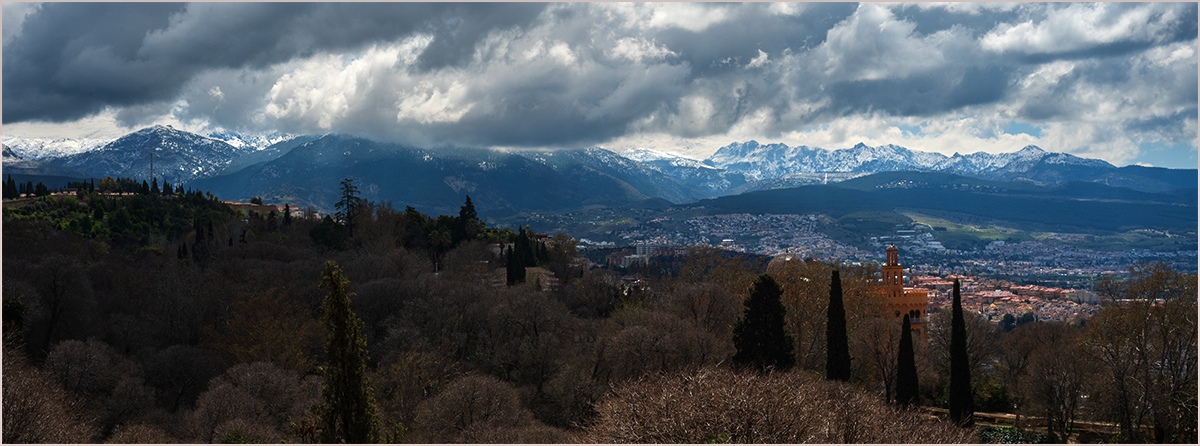
As we walked we could see the snow-covered Sierra Nevada in the distance reminding us that we had felt quite chilly earlier in the day, despite the blue skies. Apparently there had been a heavy snowfall just a day or so earlier.
We were glad of the sun and took the opportunity to walk back to the hotel a different way from the bus stop, discovering goodies as we went. As in Barcelona a few months ago, we seem to have been directed towards accommodation in the ‘characterful’ part of the city and that’s always interesting.
One of the things we noticed was just how well the whole Alhambra complex was maintained. Here’s why:
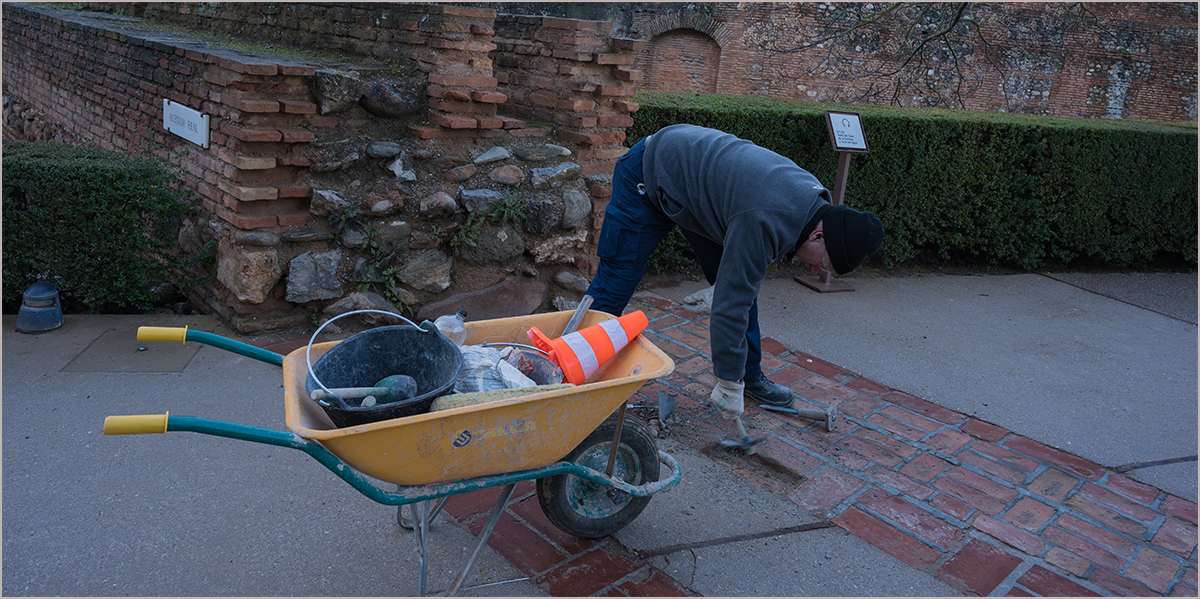
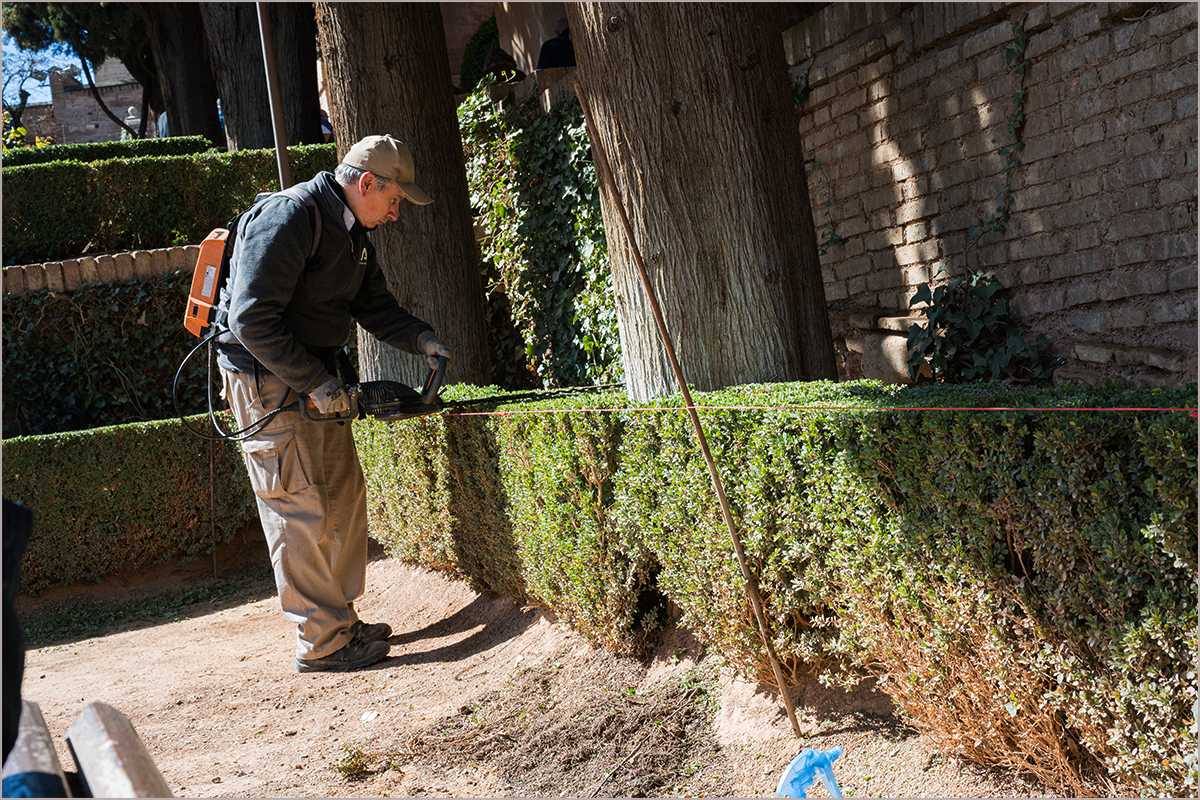
There were workers all over the place. Made me think of the Forth Bridge!
Siesta calls!
 Living the Journey