As I write we are creeping (at about 16.5 knots per hour) towards Admiralty Bay in the South Shetland Islands. We left Stanley in the Falklands late yesterday afternoon and have now been at sea for more than 24 hours without sight of land.
I had always understood that the Southern Ocean to be among the most dangerous and least predictable in the world and that’s what we’ve seen. As we left Stanley the wind gathered speed and overnight it was at gale force with a swell of about five metres. I was very lucky and slept right through it. Indeed, there has been very little evidence of people suffering other than the Spa offering acupuncture for seasickness and guaranteeing one treatment to last at least for the duration of the cruise.
I woke early to grey skies and the high seas have continued through the day, so I think everyone on board has taken the opportunity to build resources for a day of scenic cruising in Antarctica tomorrow and for the two days following. Indeed, the weather has made this a real experience, bringing home to us the reality of where we are and enabling us to appreciate all the advantages we have over those early travellers with no means of communication and no reliable maps.
Let me go back a day and talk a little about the Falklands. For me, this was a distant place imprinted on my mind by the war of 1982. Yesterday I saw a real community of people with a distinctive character, still very grateful to Britain for our intervention at the time when Argentina tried to seize sovereignty over Las Islas Malvinas, as they are known in Spanish. It was a moment of awakening, rather like coming across places in Vietnam that I recognised from the news reports of the war there.
I hadn’t expected there to be so many similarities to the far north of Scotland. Indeed, a number of people commented on the islands’ likeness to both Scotland and Ireland, with its craggy outcrops and peat bogs.
My first concern was about getting off the ship. This was a tender port. That meant getting from the ship into a small boat. Not my forte. Last time I had had to do anything similar was in about 1972 and then I seem to remember climbing down a rope ladder to a small dinghy bobbing in the water alongside. It’s rather more sophisticated here! The lifeboats are tenders and they run a shuttle service from the ship to the jetty. The lifeboat is tied up to a solid metal ladder down from the ship ( maybe 14 rungs), just like a staircase. You don’t even have a steep step down: the tender is level with the pontoon so it’s just like getting off a tube train where the platform and the train floor are level. Easy! Even for me.
The journey to the jetty, too, was easier than had been suggested. It was only the final return boat that had to fight increasing winds and seas.
There were a number of excursions on offer and I had chosen to go to see the penguins at Bluff Cove – partly because it offered more than one breed of penguins and partly because I knew the name Bluff Cove and though I might get a bit of history thrown in with the visit.
First, we were divided into groups of 16 to board minibuses which drove for about 20 minutes to a car park where we split into four groups of four and got into 4x4s (mainly Landrovers) to drive over the rocky, peaty, land to the penguin rookery at the lagoon. Good conversation with our lady driver on the way was followed by a full hour to view the penguins and enjoy scones, cake, coffee and shopping – what more could we ask for!?
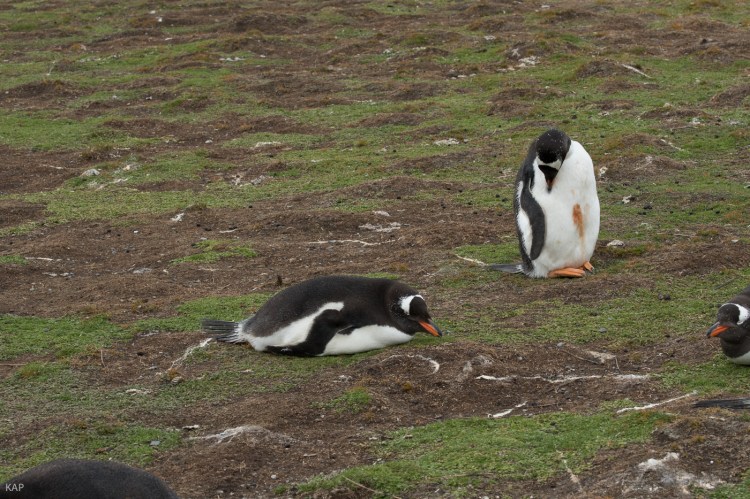
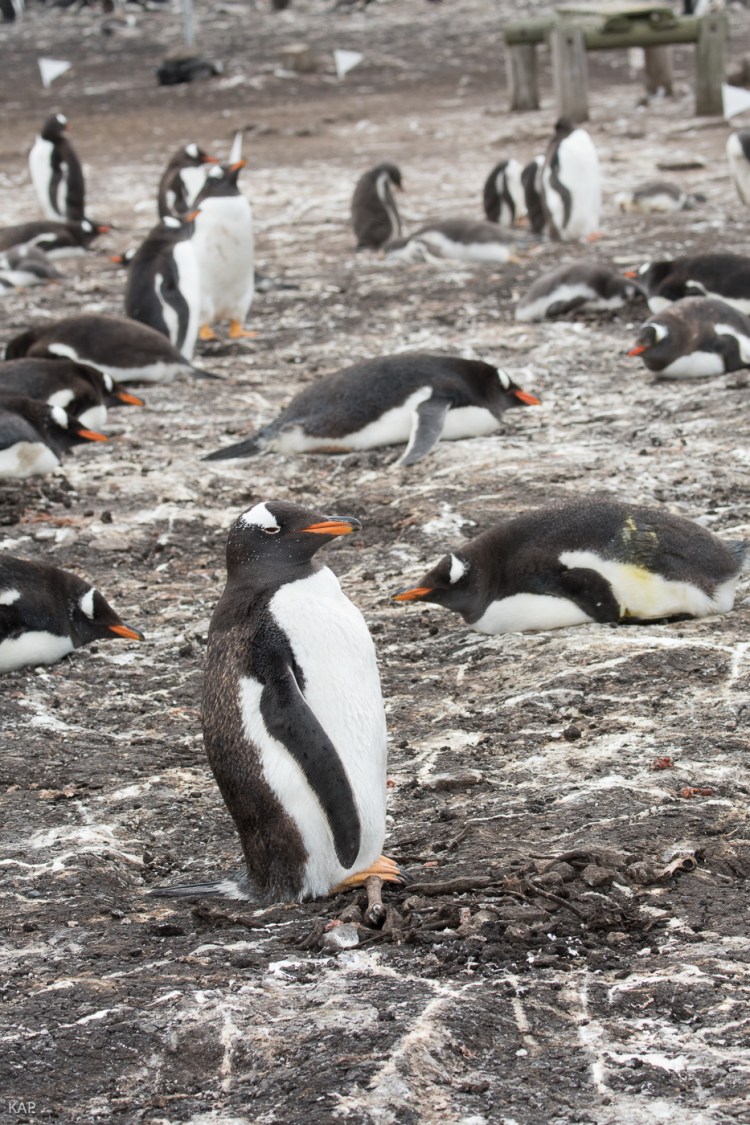
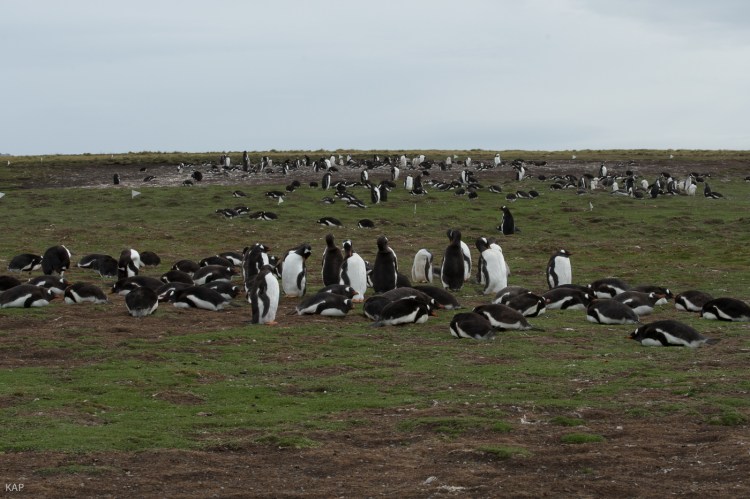
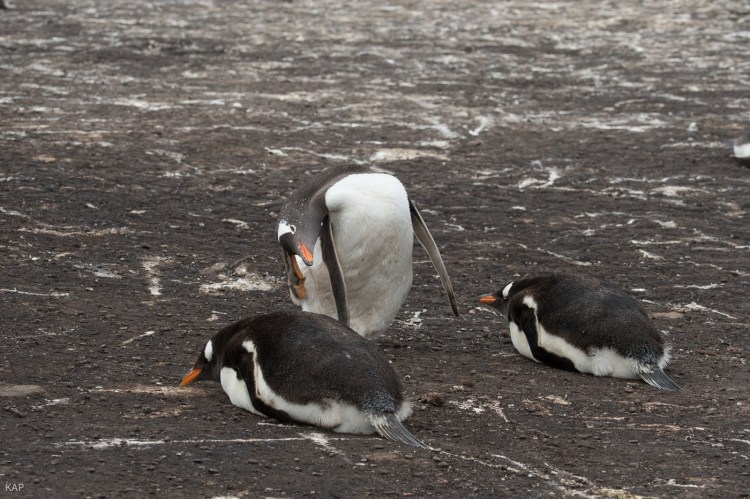
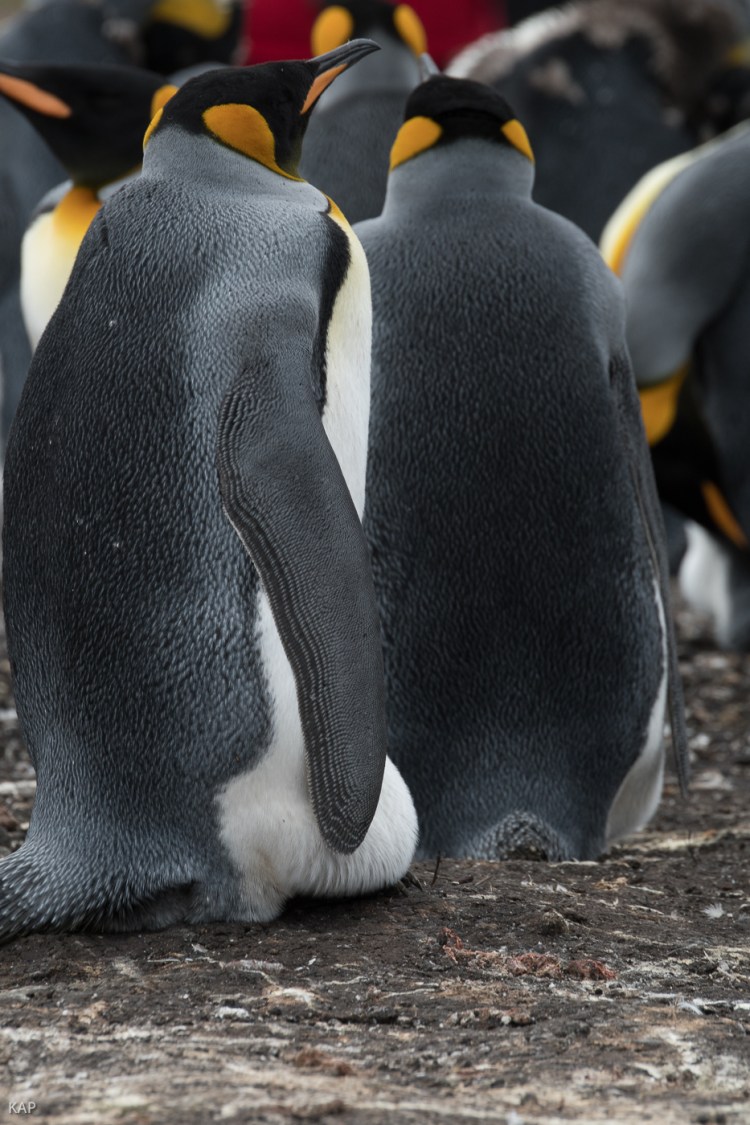
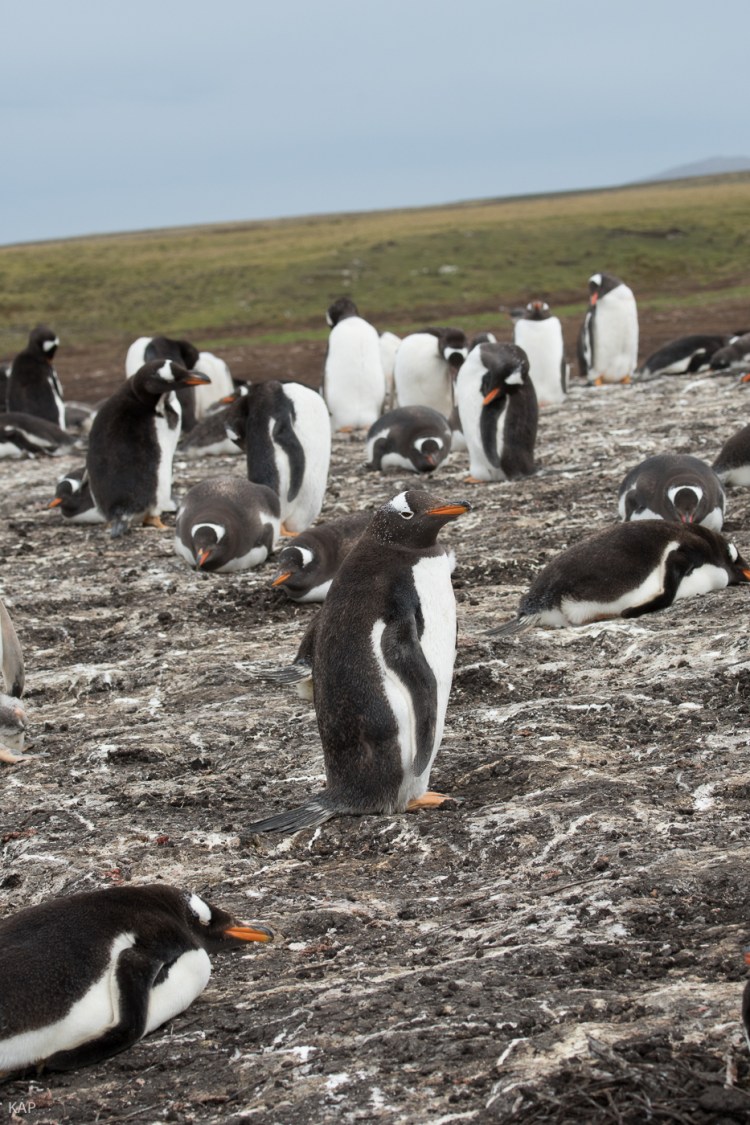
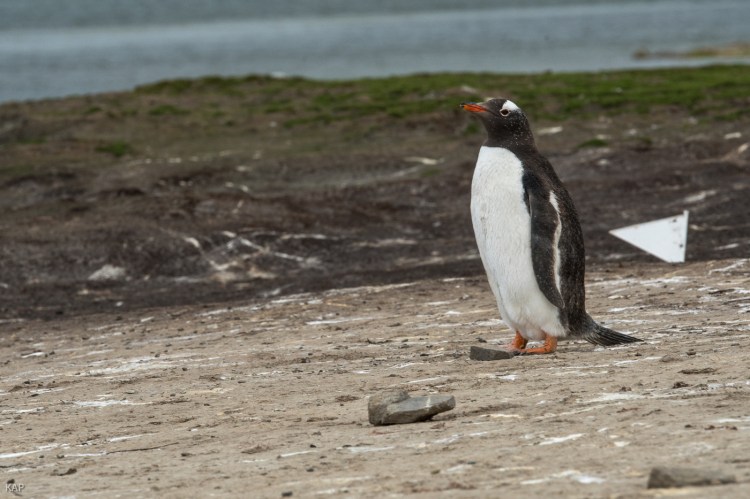
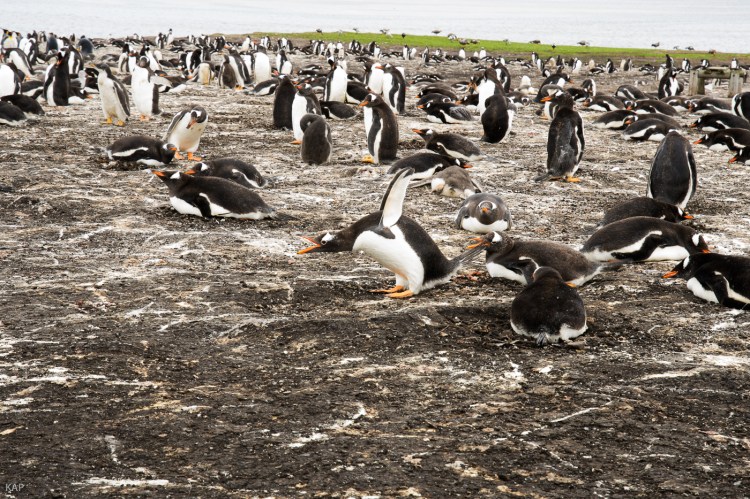
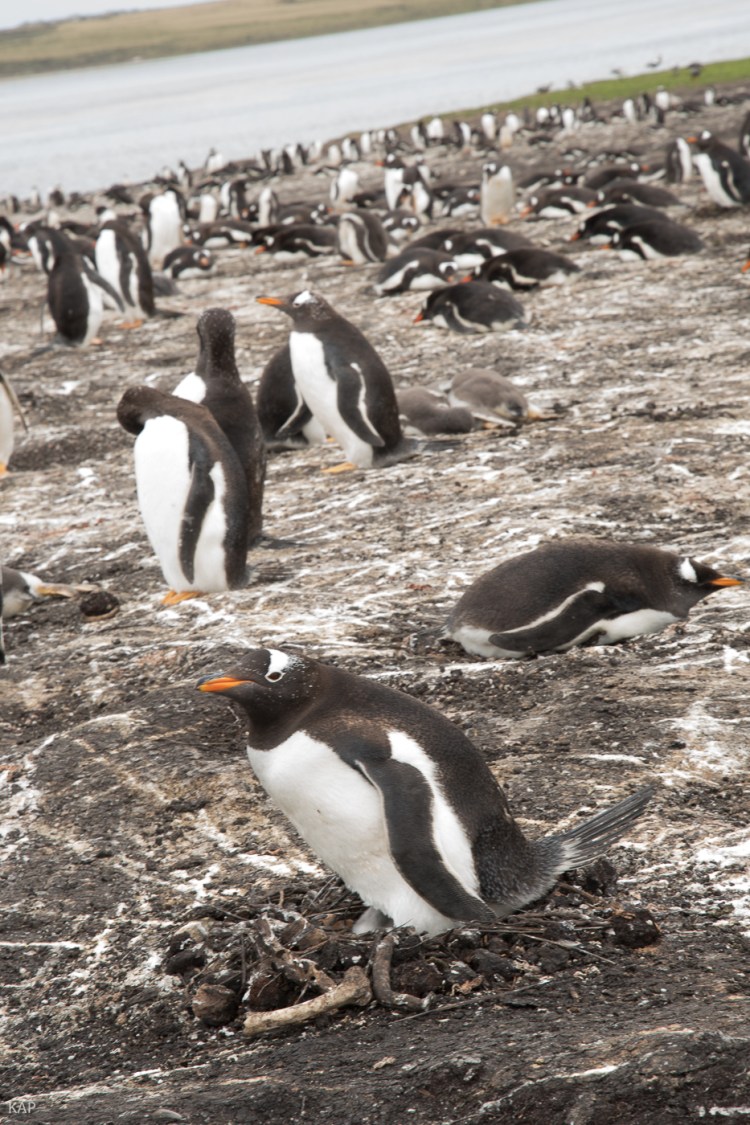 Gentoo and King penguins share this site and the owner carefully marks out an area beyond which humans should not go. This means that the birds are not unduly disturbed and know that the young they are protecting or the egg they are hatching are safe. There were many nesting birds, hatching their young and almost as many either with a chick protected in its pouch or running around playing nearby. Definitely a place to visit if you have the opportunity to get this far south.
An easy ride back to town and I headed to the Historic Dockyard Museum which has some amazing displays for just £5 per adult. There’s a fascinating film about the 1982 invasion through the eyes of the children – I hope it’s available to History teachers in other countries because it certainly brings home the reality and uncertainty of war, the inability to get information or to be clear about what’s going on, the need for secrecy, so ‘better not let the children know, they might say something’.
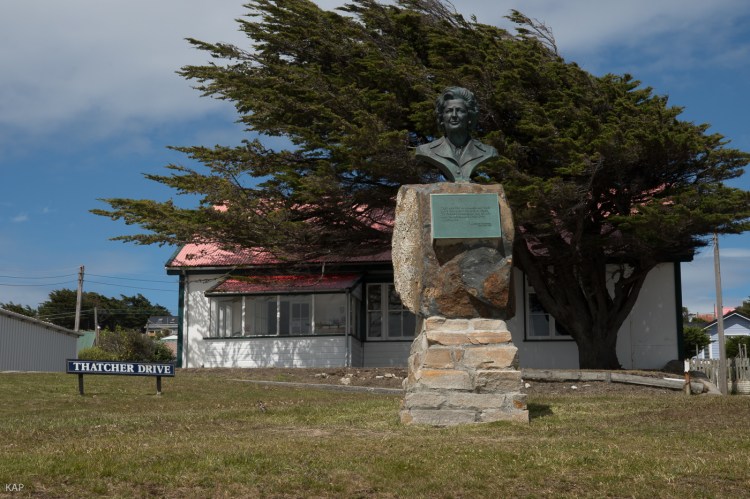
Further along the main drag (Ross Road) is the Liberation Monument – not a war memorial as such but a tribute to all who were involved in the ’82 conflict. It’s impressive and a nice idea, I thought, not just to honour the dead. We have learnt increasingly over the years that the survivors of battle also suffer. But here it is LIBERATION that is celebrated. Nearby, alongside the street name ‘Thatcher Drive’ is a bust of the Iron Lady herself, accompanied by her April 3rd statement:
They are few in number but they have the right to live in peace, to choose their own way of life and to determine their own allegiance.
Margaret Thatcher

Studio 52 and the Tourist Information office shop have some great, original, souvenirs as do the other two gift shops along Ross Road as you walk back from the Museum to the jetty.
I took a few minutes and went in to Christchurch Cathedral where I was intrigued by the crest in one of the stained glass windows behind the altar. It contained a crest which looked as though it should be that of a bishop but it had an outline map of the whole South American continent. Yes, that was the original diocese! It was only when the number of Anglicans increased that a division was made, but still it’s a shared diocese. At the same time I discovered that some of the early work of the South American Missionary Society (SAMS) was done in the Falklands and Tierra del Fuego with languages being learned and translated/ decoded. That was a surprised as I had not much associated SAMS with the Anglican Church.
All too soon, it was time to get back to the jetty, board a tender and bid farewell to this small but seemingly thriving community, so far from anywhere but so happy to feel free and supported.
 Living the Journey